
.avif)

Enclosing vents and decks with high-quality mesh is a top priority recommended by major fire safety authorities, including the Insurance Institute for Business & Home Safety (IBHS) and the National Fire Protection Association (NFPA). High-performance mesh features a thick wire diameter engineered to withstand the impact of flying debris and dangerous embers under high winds.
Material and labor costs generally range from $500 to $1,500, depending on the size of the home, the number of vents, and installation complexity (such as requiring specialized equipment for multi-story homes). Costs are minimized because the mesh is available in specific linear footage roll increments (for example, 5, 25, or 50 feet), allowing homeowners to buy only what they need and eliminate material waste. Communities can further eliminate professional labor costs by organizing volunteer installation days via the Wildfire Defenders Community Program.
The platform is entirely free for community leaders and is designed to automate material calculations and reduce administrative tasks. It provides a number of tools to organize homeowner information and calculate material needs. It offers a tiered community discount that starts at 10% and scales up to 15% as neighborhood participation increases. Homeowners benefit from economies of scale by purchasing mesh in bulk. While installation labor must be sourced locally, the platform can provide training programs and resources to prepare volunteer teams.
Community-led projects should utilize a clear, straightforward liability waiver template for all participants. To mitigate safety risks, volunteer labor can be strictly focused on low-risk tasks, such as ground-level foundation vents. A licensed professional contractor should be hired to handle high-risk areas, such as second-story vents or roof installations.
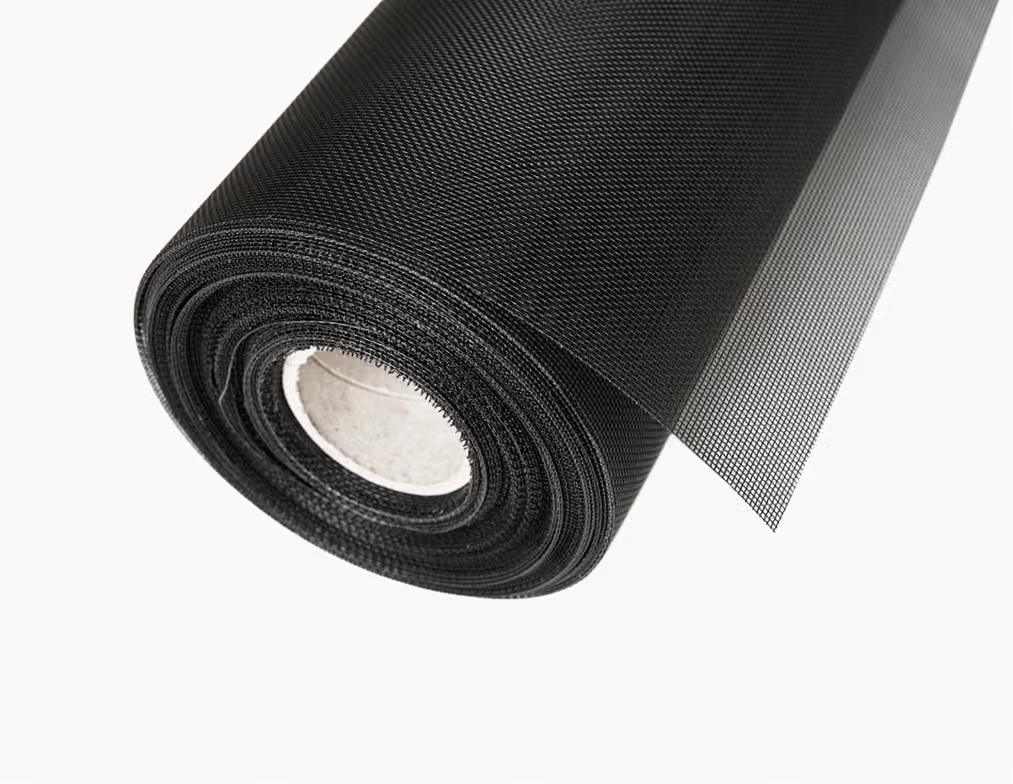
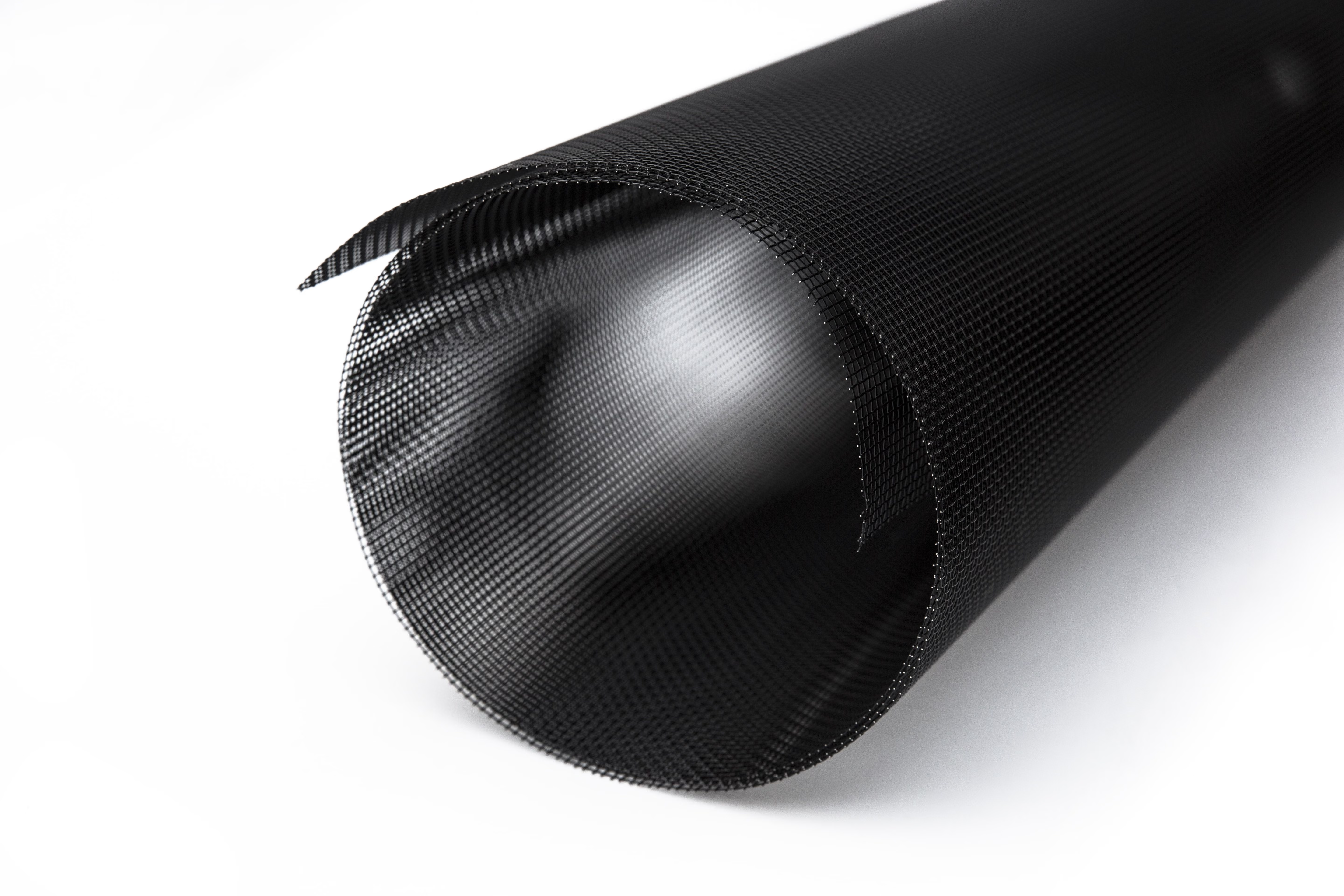
Premium Wildfire Defense Mesh (available in 1/16" and 1/8" openings) is constructed from high-tensile stainless steel, which offers double the strength of galvanized steel and superior rigidity to hold its shape. It effectively deflects radiant heat, blocks dangerous embers, resists long-term corrosion, and provides a barrier against pests and rodents. Standard big-box galvanized mesh is typically thinner, flimsier, prone to rusting, and often features a larger, irregular weave that can allow embers to pass through.
Yes. During the Altadena fires, a home retrofitted with Wildfire Defense Mesh around its deck survived a massive ember cast that destroyed multiple nearby houses. Because the mesh prevented the deck from igniting, the homeowner was able to safely focus attention on extinguishing spot fires in the surrounding vegetation. Wildfire Defense Mesh is a proven system component that works most effectively when paired with proper defensible space practices and comprehensive home hardening.
Enclosing vents and decks with high-quality mesh is a top priority recommended by major fire safety authorities, including the Insurance Institute for Business & Home Safety (IBHS) and the National Fire Protection Association (NFPA) Firewise USA. High-performance mesh features a thick wire diameter engineered to withstand the impact of flying debris and dangerous embers under high winds.
Material and labor costs for retrofitting vents generally range from $500 to $1,500, depending on the size of the home, the number of vents, and installation complexity (such as requiring specialized equipment for multi-story homes). Costs are minimized because the mesh is available in specific linear footage roll increments (e.g., 5, 25, or 50 feet), allowing homeowners to buy only what they need and eliminate material waste. Communities can further eliminate waste by sharing rolls and professional labor costs by organizing volunteer installation days via the Wildfire Defenders Community Program.
The platform is entirely free for community leaders and is designed to automate material calculations and reduce administrative tasks. It provides a number of tools to organize homeowner information and calculate material needs. It offers a tiered community discount that starts at 10% and scales up to 15% as neighborhood participation increases. Homeowners benefit from economies of scale by purchasing mesh in bulk. While installation labor must be sourced locally, the platform can provide training programs and resources to prepare volunteer teams.
Premium Wildfire Defense Mesh (available in 1/16” and ⅛” openings) is constructed from high-tensile stainless steel, which offers double the strength of galvanized steel and superior rigidity to hold its shape. It is highly engineered and US patent pending, showing the amount of years of research to allow for reducing radiant heat, blocking dangerous-embers, resisting long-term corrosion, and providing a barrier against pests and rodents. Standard big-box galvanized mesh is typically thinner, flimsier, prone to corrosion, and often features a larger, irregular weave that can allow embers to pass through.
Yes. During the Altadena fires, a home retrofitted with Wildfire Defense Mesh around its deck survived a massive ember cast that destroyed multiple houses 2 and 3 up from the home. Because the mesh prevented the deck from igniting, the homeowner was able to safely focus attention on extinguishing spot fires in the surrounding vegetation at the front of the house. Wildfire Defense Mesh is a proven system component that works most effectively when paired with proper defensible space practices and comprehensive home hardening.
When becoming a Firewise community or integrating IBHS’ Wildfire Prepared Home designation, the checklist of items for a homeowner and a community can become daunting.
Some critical questions start being asked:
Vent retrofits are one of the most effective home hardening measures communities can undertake to reduce wildfire risk, especially when combined with defensible space. Yet while the work itself is straightforward, organizing a successful community-wide retrofit program can quickly become overwhelming.
From homeowner outreach and education to collecting vent measurements, managing registrations, coordinating installers, tracking materials, and documenting progress, the administrative workload often becomes the biggest barrier to getting homes protected.
The good news? It doesn't have to be.
Hear from James Greer, Founder and CEO of Wildfire Defense Mesh, and Seychelle Bradley, Program Manager of Wildfire Defenders as they walk through a proven framework for planning, organizing, and executing community-scale vent retrofit and home hardening projects, while dramatically reducing the administrative burden on local leaders and volunteers.
Viewers will also receive an introduction to the Wildfire Defenders Command Center, a platform designed to simplify project management so community leaders can spend less time on paperwork and more time engaging residents and building momentum.
This webinar was presented by Wildfire Defenders in partnership with Fire Adapted Nevada and the Nevada Division of Forestry.
All wildfire preparedness and community mitigation organizations are welcome to attend. Together, we can make community-scale home hardening more accessible, more efficient, and more impactful.
To request your free samples, please complete the form below.
For more information, contact:
Kelli Nevills
Conservation Staff Specialist II Fire Adapted Nevada Coordinator
Nevada Division of Forestry
Kelli.Nevills@forestry.nv.gov
About Your Speaker
Seychelle Bradley is the Program Manager of Wildfire Defenders and Marketing Lead for the Topanga Coalition for Emergency Preparedness (TCEP). She specializes in community engagement and program strategy, and has been on the ground helping communities move from awareness to action.
About Wildfire Defenders
Wildfire Defenders builds tools and programs that help communities harden against wildfire starting with the most vulnerable point of entry: vents and deck perimeters. The Command Center is their platform for community coordinators: free to access, built for action. Wildfire Defenders is a community program of Wildfire Defense Mesh.