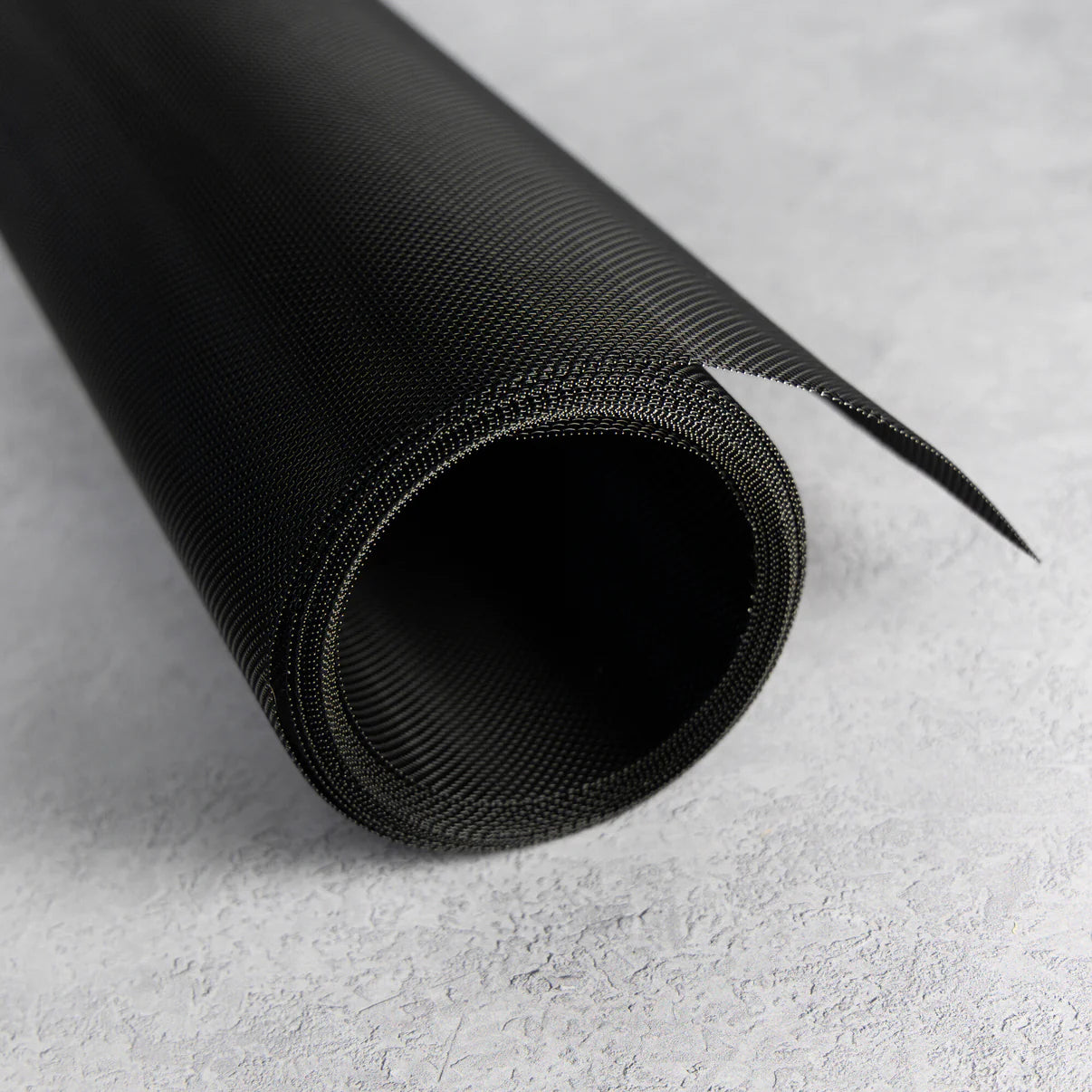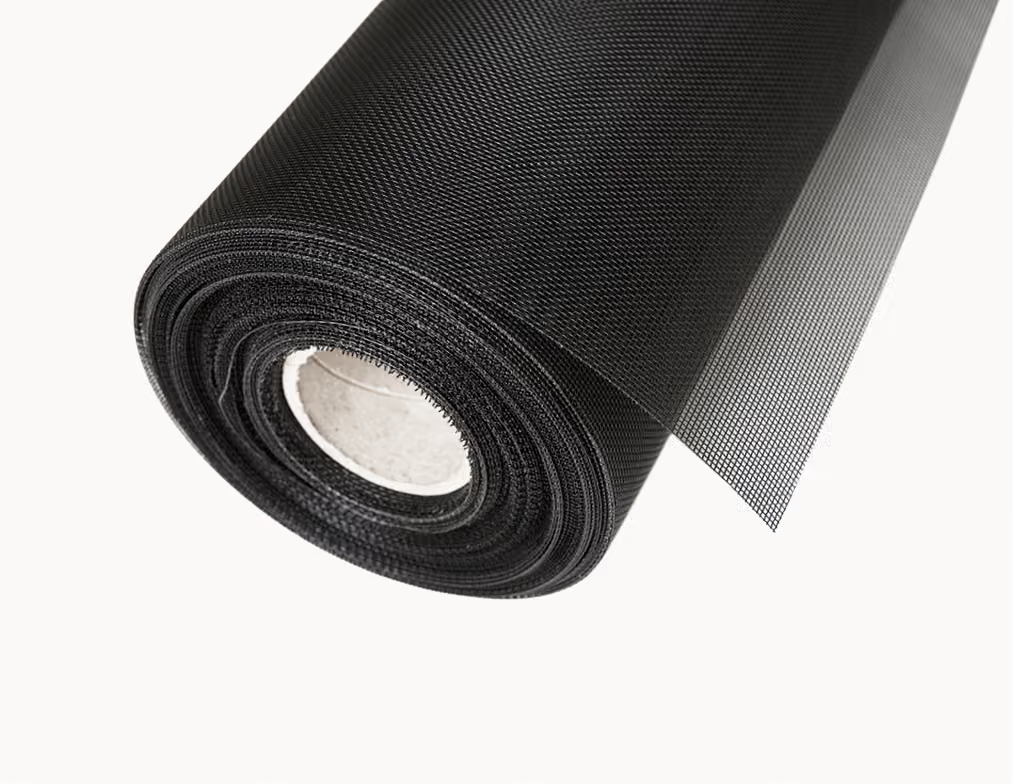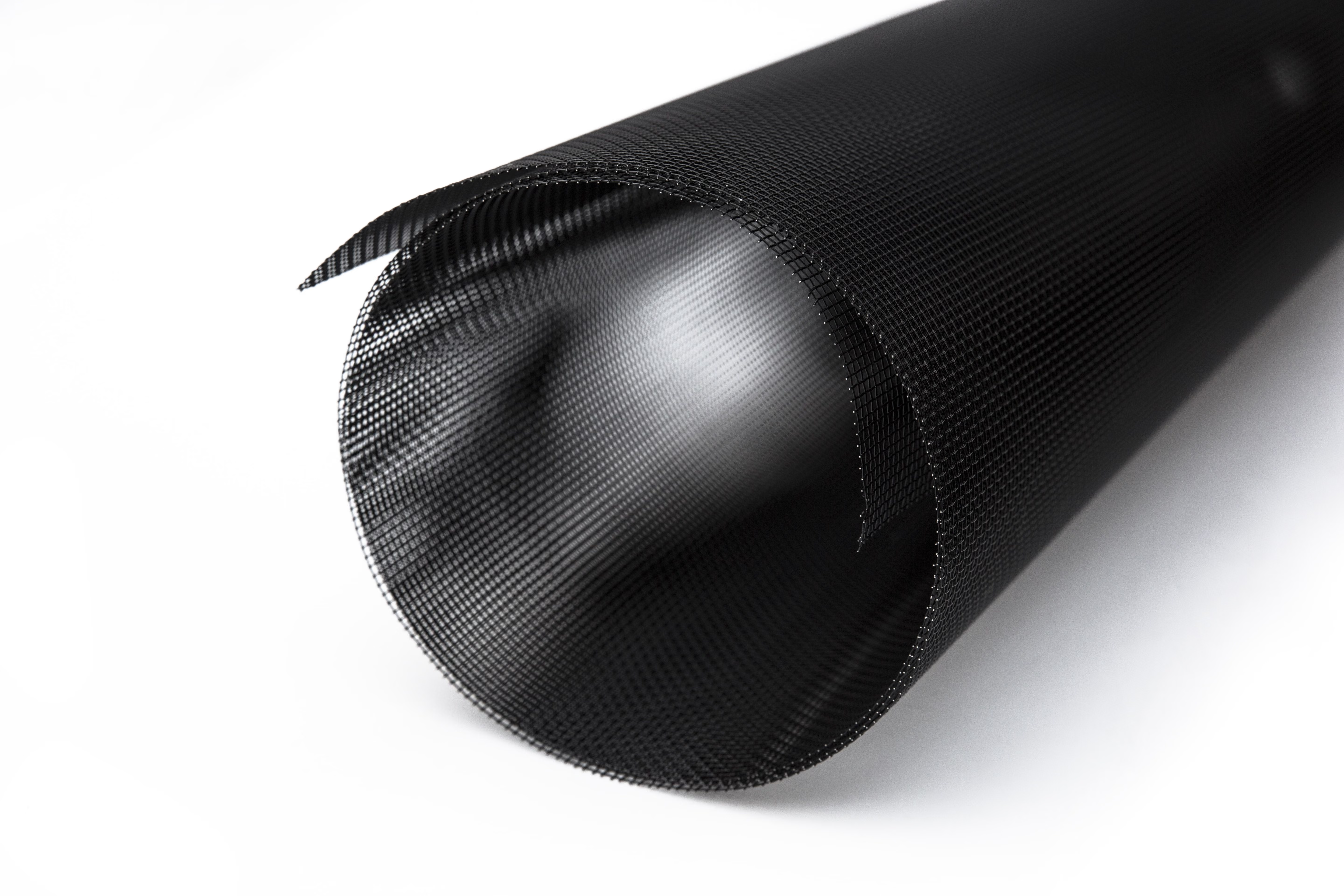

Our highest level of dangerous-ember protection in a black, corrosion-resistant finish that blends into darker trim. 1/16" openings provide added defense against debris, pests, and rodents.


Designed for easy, cut-to-fit protection, mesh rolls work on standard vents and openings and let you customize coverage when needed. In addition to dangerous embers, they help block leaves, debris, and other combustible materials from hard-to-reach areas, keeping critical parts of the home cleaner and safer. As an added bonus, our mesh creates a tough barrier that helps keep pests and rodents out of vulnerable openings.
Common applications include:


High Tensile Woven Wire
Chapter 7A, 706A2
Wildfire Defense Mesh meets the requirements of the CBC, Chapter 7A 706A.2 when tested to ASTM E2886 (Vertically Installed). For best results, remove all combustible materials within 5ft of the mesh application.
Chapter 7A, 706A2.1
Wildfire Defense Mesh meets the requirements of the CBC, Chapter 7A 706A.2 – Off Ridge and Ridge Vents
2021 International Buildland Urban Interface Code (IWUIC)
Compliant with IWUIC Mesh specifications
NFPA 1144: Standard for Reducing Structure Ignition Hazards from Wildland Fire
Compliant with IWUIC Mesh specifications
NFPA Firewise USA, IBHS Wildfire Prepared Home & Fire Authorities
Meets the recommendations when ‘⅛” mesh or finer’ is recommended

Class A Fire Rated Building Product
Surface Burning Characteristics of Building Materials
UL 723 / ASTM E84
30 minute Test


Evaluating the Ability of Exterior Vents to Resist the Entry of Embers and Direct Flame Impingement (Vertical). For best results, remove all combustible materials within 5ft of the mesh application.
ASTM E2886
Flame and Ember Resistance
Evaluating the Ability of Exterior Vents to Resist the Entry of Embers and Direct Flame Impingement (Vertical). For best results, remove all combustible materials within 5ft of the mesh application.
ASTM E2886
Evaluating the Ability of Exterior Vents to Resist the Entry of Embers and Direct Flame Impingement (Vertical). For best results, remove all combustible materials within 5ft of the mesh application.
ASTM E2886
Evaluating the Ability of Exterior Vents to Resist the Entry of Embers and Direct Flame Impingement (Vertical). For best results, remove all combustible materials within 5ft of the mesh application.
ASTM E2886
Flame and Ember Resistance
Evaluating the Ability of Exterior Vents to Resist the Entry of Embers and Direct Flame Impingement (Vertical). For best results, remove all combustible materials within 5ft of the mesh application.
ASTM E2886
Flame and Ember Resistance
Evaluating the Ability of Exterior Vents to Resist the Entry of Embers and Direct Flame Impingement (Vertical). For best results, remove all combustible materials within 5ft of the mesh application.
ASTM E2886
Flame Impingement
Fire Test on Non-Mechanical Fire Dampers Used in Vented Construction (Vertical). For best results, remove all combustible materials within 5ft of the mesh application.
ASTM E2912-17
Flame Impingement
Fire Test on Non-Mechanical Fire Dampers Used in Vented Construction (Vertical). For best results, remove all combustible materials within 5ft of the mesh application.
ASTM E2912-17
Flame Impingement
Fire Test on Non-MechanicalFire Dampers Used in Vented Construction (Vertical). For best results, remove all combustible materials within 5ft of the mesh application.
ASTM E2912-17
Flame Impingement
Fire Test on Non-MechanicalFire Dampers Used in Vented Construction (Vertical). For best results, remove all combustible materials within 5ft of the mesh application.
ASTM E2912-17
Flame Impingement
Fire Test on Non-Mechanical Fire Dampers Used in Vented Construction (Vertical)
ASTM E2912-17
Class A Fire Rated Building Product
Surface Burning Characteristics of Building Materials
UL 723 / ASTM E84
30 minute Test
Evaluating the Ability of Exterior Vents to Resist the Entry of Embers and Direct Flame Impingement (Vertical). For best results, remove all combustible materials within 5ft of the mesh application.
ASTM E2886
Evaluating the Ability of Exterior Vents to Resist the Entry of Embers and Direct Flame Impingement (Vertical). For best results, remove all combustible materials within 5ft of the mesh application.
ASTM E2886
Evaluating the Ability of Exterior Vents to Resist the Entry of Embers and Direct Flame Impingement (Vertical). For best results, remove all combustible materials within 5ft of the mesh application.
ASTM E2886
Flame and Ember Resistance
Evaluating the Ability of Exterior Vents to Resist the Entry of Embers and Direct Flame Impingement (Vertical). For best results, remove all combustible materials within 5ft of the mesh application.
ASTM E2886
Flame Impingement
Fire Test on Non-Mechanical Fire Dampers Used in Vented Construction (Vertical). For best results, remove all combustible materials within 5ft of the mesh application.
ASTM E2912-17
Flame Impingement
Fire Test on Non-Mechanical Fire Dampers Used in Vented Construction (Vertical). For best results, remove all combustible materials within 5ft of the mesh application.
ASTM E2912-17
Flame Impingement
Fire Test on Non-Mechanical Fire Dampers Used in Vented Construction (Vertical). For best results, remove all combustible materials within 5ft of the mesh application.
ASTM E2912-17
Flame Impingement
Fire Test on Non-Mechanical Fire Dampers Used in Vented Construction (Vertical)
ASTM E2912-17

Stainless Steel Woven Mesh Standards
SS Chemical Composition ASTM – A580

Corrosion Test
Stainless Steel Corrosion Resistance
AS/NZS 2331
Bushfire Test & Standards
Aperture Dimensions AS 3959


Every screen over a vent blocks some air. Building codes count only the open part of a vent, called its net free area (NFA). Here is how much air space this mesh leaves open, and a quick way to check your vents.
of each vent opening stays open to air with this mesh. Multiply the opening by this to get its net free area.
Common code minimum: 1 sq ft of net free vent area for every 150 sq ft of attic or crawl space floor.
Take the old screen off before you install. Two layers make airflow hard to predict.
WDM 98 has the finest openings. WDM 75 lets more air through. Both are woven 304 stainless steel.
Enter your space and your vents. The check uses this product's open area and the 1/150 rule.
Open area figures are WDM's published specs (WDM 98 about 62%, WDM 75 about 74%). The 1/150 rule is the base minimum in the International Residential Code (R806.2, attics) and the California Residential Code (R408.2, crawl spaces). Some homes qualify for a lower ratio, and local rules vary. This is a guide, not a code review.
Sources
California's wildfire code lists noncombustible, corrosion-resistant mesh with 1/16 to 1/8 inch openings as one way to cover vents. Here is how WDM's 304 stainless steel compares with the aluminum and galvanized steel mesh sold at hardware stores.
Swipe sideways to see all columns.
General material data, not a fire rating for any product. Galvanized steel's core melts far above wildfire temperatures; its zinc layer does not. Check the code that applies to your home.
Sources
WDM 98 has 1/16" openings. The exact aperture is 0.0657" (1.67 mm), woven from 0.0177" (0.45 mm) wire.
Three finished sizes: 8" x 17", 6" x 17" and 8" x 16".
Yes. The mesh is easy to manipulate and cut with standard tin snips, so you can trim it to fit custom-sized vents and openings.
No. Each screen comes pre-sized with a durable frame and pre-made screw holes, ready to install.
About 62% of WDM 98 is open area. To check how much vent area your home needs, use our Net Free Area calculator.
8" x 17": 62.47 sq in. 6" x 17": 43.25 sq in. 8" x 16": 52.08 sq in.
WDM 98 meets the requirements of the California Building Code, Chapter 7A 706A.2, when tested to ASTM E2886 (vertically installed). It is also a Class A fire rated building product under UL 723 / ASTM E84. For best results, remove all combustible materials within 5 ft of the mesh application.
Grade 304 stainless steel in a plain weave, with a black powder coat finish that won't decay or corrode.
WDM 98: 0.0657" (1.67 mm) openings, 304 stainless steel, black powder coat, about 62% open area.
Yes. Besides embers, the 1/16" openings help block debris, pests and rodents.
Common uses include vents and weepholes (especially custom-sized openings), enclosing decks, patios and subfloor spaces, roofs and birdstops, eaves and awnings, and soffits and crawlspace openings.