
Most people picture a wall of orange flame bearing down on a house. That's not typically how homes are lost. The science of wildfire tells a different story — one where small, wind-carried embers, not the fire itself, are the real culprits. Understanding that distinction is the most important first step any homeowner in a fire-prone area can take.
When we watch news coverage of wildfires, cameras capture dramatic footage: roaring flame fronts, walls of smoke, entire neighborhoods engulfed at once. This imagery shapes how most homeowners think about the risk to their property. But wildfire scientists have long understood that this picture is incomplete — and misleading.
Research consistently shows that the main flame front of a wildfire passes through an area in as little as one to ten minutes. Homes rarely ignite on contact with that flame front. Instead, they are lost hours later, as embers that settled on rooftops, in gutters, under decks, and inside vents finally reach ignition temperature.
"Embers from wildfires, not the flames from the main body of the wildfire, are the main threat that homes must resist." — ASTM member Stephen Quarles, Insurance Institute for Business & Home Safety
Wildfire poses three distinct physical threats to a structure, each requiring different defensive measures:
Of these three, embers are by far the most prevalent cause of home loss. According to the California Office of the State Fire Marshal, between 60 and 90 percent of home ignitions during wildfires are caused by embers — not flames. Research from the University of Idaho similarly found that over 90 percent of wildland-urban interface home ignitions were triggered by flying embers. The NFPA confirms that embers and small flames from low-intensity surface fires continue to be the primary ignition sources in post-fire evaluations of destroyed homes.
One of the most underappreciated facts about wildfires is the distance embers can cover. The U.S. Forest Service and the California Fire Safe Council define dangerous embers as burning material capable of traveling more than a mile ahead of an active fire. Under extreme wind conditions — which wildfires frequently generate through their own convective columns — embers can travel even farther.
This means a home that appears well outside the fire perimeter can still receive an ember attack. Neighborhoods that haven't seen the fire itself can lose dozens of homes in a matter of hours, simply from ember accumulation on rooftops, in gutters, and on decks. The 2021 Marshall Fire in Colorado and the 2007 Witch Creek Fire in San Diego County both demonstrated this effect at scale, with embers racing ahead of the main fire to ignite homes across large areas.
Embers don't need an open door. They find their way into homes through small gaps and openings that most homeowners never think about. Understanding these entry points is essential to effective protection:
IBHS research on deck ignitions found that all ember-ignited deck fires start as small smoldering fires in the gaps between deck boards, eventually spreading under the deck area where wind assists combustion. Even wind speeds as low as 12 mph were sufficient to enable fire spread in lab tests.
If you've been researching ember-resistant products, you've likely seen the designation "tested to ASTM E2886." Here's what that actually means.
ASTM E2886 is a rigorous test standard developed by ASTM International to evaluate exterior vents' ability to withstand wildfire ember and flame exposure. It was developed in direct response to post-fire research showing that unscreened or inadequately screened vents were a primary ignition pathway.
To pass ASTM E2886, a vent or mesh product must meet all three of the following criteria:
Under California's Chapter 7A of the Building Code — which governs new construction and major renovation in Wildland-Urban Interface areas — all ventilation openings must be covered with vents or mesh that meet ASTM E2886 standards. The International Building Code references ASTM E2886 for the same reason.
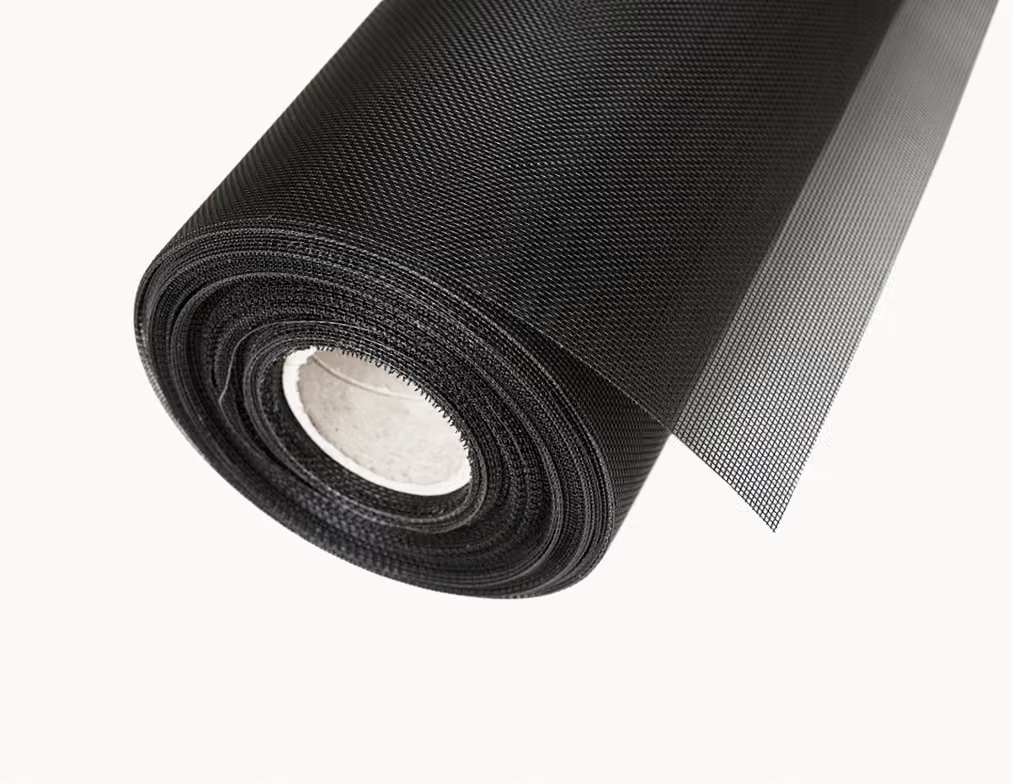
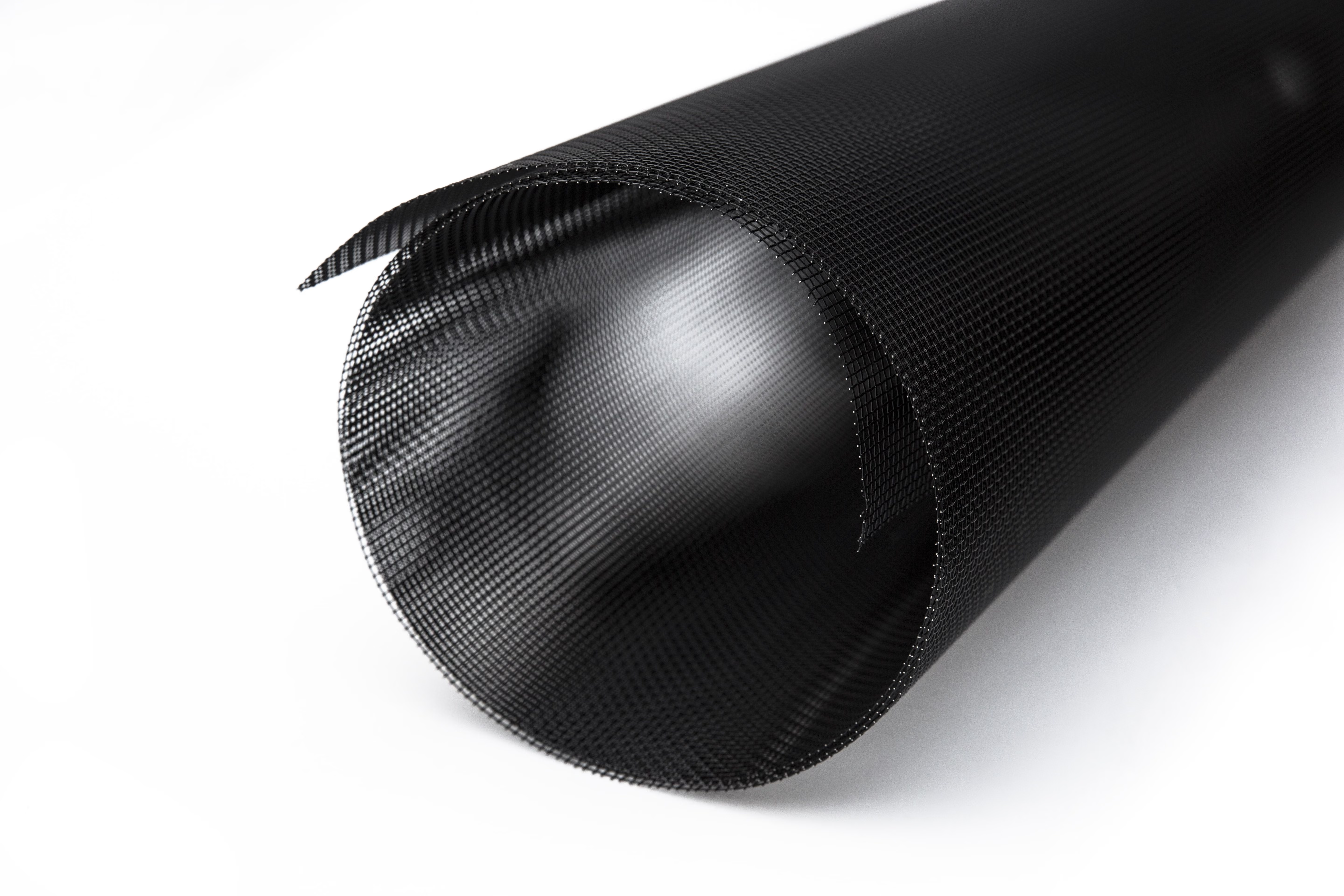
The good news in all of this research is that ember protection is achievable — and it doesn't require a full rebuild. Wildfire Defense Mesh is tested to ASTM E2886 standards and designed to cover every entry point listed above: foundation vents, soffit and gable vents, gutters, under-deck areas, window and door frames, bird stops, and perimeter fencing.
The IBHS Wildfire Prepared Home program — the first science-based designation program for homeowners — specifically requires flame- and ember-resistant vents and a noncombustible zone within 5 feet of the home as baseline conditions for designation. WDM-equipped homes in Chino, California were among the first in Southern California to receive this designation.
A home audit is the right place to start. Walk your property and identify every opening listed above. Prioritize foundation vents, soffit vents, and any gaps under decks or around eaves — these are the highest-probability ignition points. From there, Wildfire Defense Mesh provides a single, cost-effective solution that addresses all of them.