
Wildfire risk doesn’t begin when smoke appears. It builds quietly over time as vegetation grows, dries, and accumulates around homes. Fire-adapted landscaping focuses on reducing ignition opportunities while still allowing outdoor spaces to function and thrive year-round.
According to the National Fire Protection Association (NFPA), most homes lost in wildfires ignite due to embers and small flames, not direct flame contact, often when embers land in combustible materials near structures. Research from the Insurance Institute for Business & Home Safety (IBHS) similarly identifies vegetation and debris close to buildings as common contributors to structure ignition during ember exposure.
Fire-adapted landscaping isn’t about removing all plants, it’s about managing them intentionally, in every season.
Both CAL FIRE’s Ready for Wildfire program and NFPA wildfire preparedness guidance emphasize removing dead vegetation and debris near the home early in the year, before fuels dry out and fire weather arrives.
These actions matter because dead plant material left from winter dries quickly as temperatures rise, becoming highly receptive fuel during ember events. CAL FIRE specifically notes that dry leaves, needles, and plant debris provide easy ignition points when embers land near structures, particularly within the home ignition zone outlined in their defensible space guidance.
Summer brings the most challenging wildfire conditions: heat, wind, and low fuel moisture.
IBHS wildfire research shows that continuous vegetation near structures allows small ignitions to grow rapidly, increasing the likelihood of structure involvement. To reduce this risk, both NFPA and CAL FIRE recommend maintaining trimmed grasses, removing ladder fuels, and avoiding dense or highly combustible plantings near buildings.
Breaking up fuel continuity during summer helps limit how quickly embers and small flames can develop into larger ignitions.
Fall is one of the most overlooked (but most critical) seasons for fire-adapted landscaping.
The NFPA’s ember research identifies accumulated leaves, needles, and bark as common ignition sources during wind-driven ember events. CAL FIRE similarly warns that dry organic debris left in gutters, planting beds, and near foundations can ignite easily when embers are present, as outlined in their defensible space recommendations.
Regular fall cleanup helps remove the materials most likely to ignite before peak fire weather arrives.
While wildfire activity may be lower in winter, agencies consistently recommend using this season to prepare.
CAL FIRE encourages winter pruning and planning because dormant vegetation is easier to manage and changes can be made safely before fire season pressure returns, as noted in their year-round wildfire preparedness guidance. Australian fire authorities echo this approach; the Country Fire Authority (CFA) of Victoria emphasizes fuel reduction and landscape planning during cooler months as key to readiness before the next fire season.
Across U.S. and Australian wildfire guidance, the same principles appear consistently:
These principles are reinforced across guidance from NFPA, IBHS, CAL FIRE, and the CFA.
Landscaping alone cannot prevent wildfire damage, but agencies like the Insurance Institute for Business & Home Safety (IBHS) and the National Fire Protection Association (NFPA) consistently emphasize that reducing ignition opportunities, both around the home and at the structure itself, plays a critical role in wildfire preparedness. Fire-adapted landscaping is most effective when paired with attention to known ember entry points, such as vents and other openings.
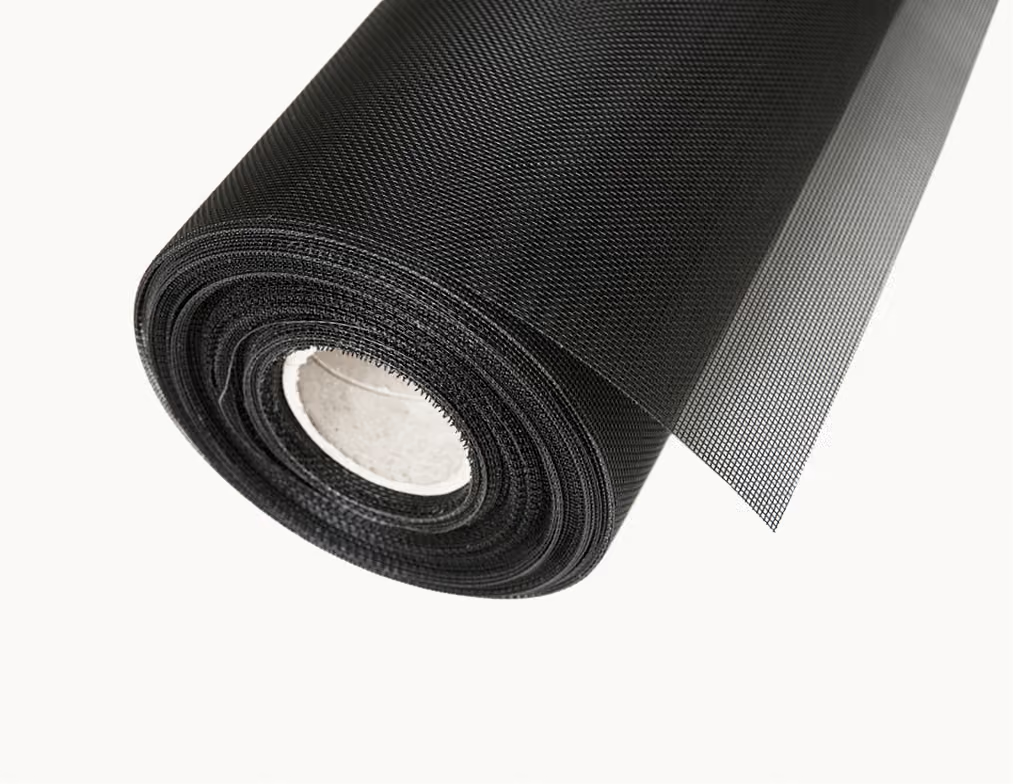
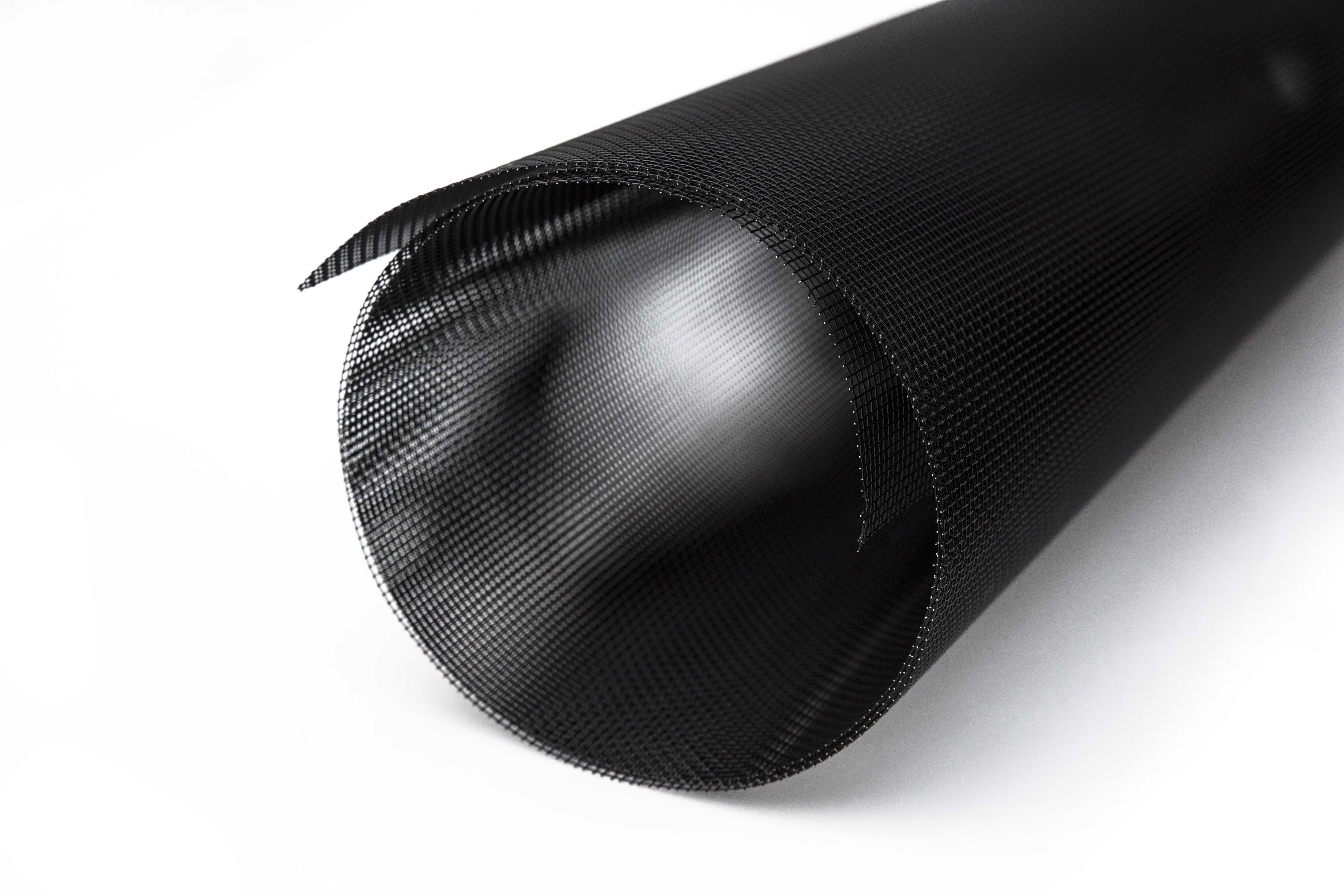
To learn how ember-resistant screening can support a layered, science-aligned approach alongside seasonal landscaping and maintenance, explore Wildfire Defense Mesh or request a sample.