
When homes are lost during wildfires, the cause is often traced back to a surprisingly small detail: unprotected vents. Fire science has repeatedly shown that vents are one of the most common entry points for embers, allowing ignition to begin inside attics and crawl spaces, often without visible warning.
Understanding why vents matter, and how they fit into a larger home-hardening strategy, is essential for reducing wildfire risk.
Vents are designed to allow airflow, regulate moisture, and protect indoor air quality. During a wildfire, however, those same openings can allow embers to enter the structure.
The National Fire Protection Association (NFPA) identifies embers as the leading cause of home ignition during wildfires, noting that they often enter through vents and other small openings.
The Insurance Institute for Business & Home Safety (IBHS) has confirmed through controlled testing that embers can penetrate standard vent designs and ignite combustible materials inside attics and wall cavities.
Once inside, embers can smolder undetected before developing into a structure fire.
IBHS testing shows that embers don’t require large openings. They can:
These findings explain why attic and crawl space ignitions are frequently identified in post-fire assessments.
State and local fire agencies also emphasize vent vulnerability as a key contributor to home loss during wildfire events.
Many homes rely on basic insect or corrosion-resistant screens. While useful for pests, these screens are not designed to block embers.
IBHS research demonstrates that vent performance varies widely depending on design and screening material. Certain configurations significantly reduce ember entry, while others provide little protection.
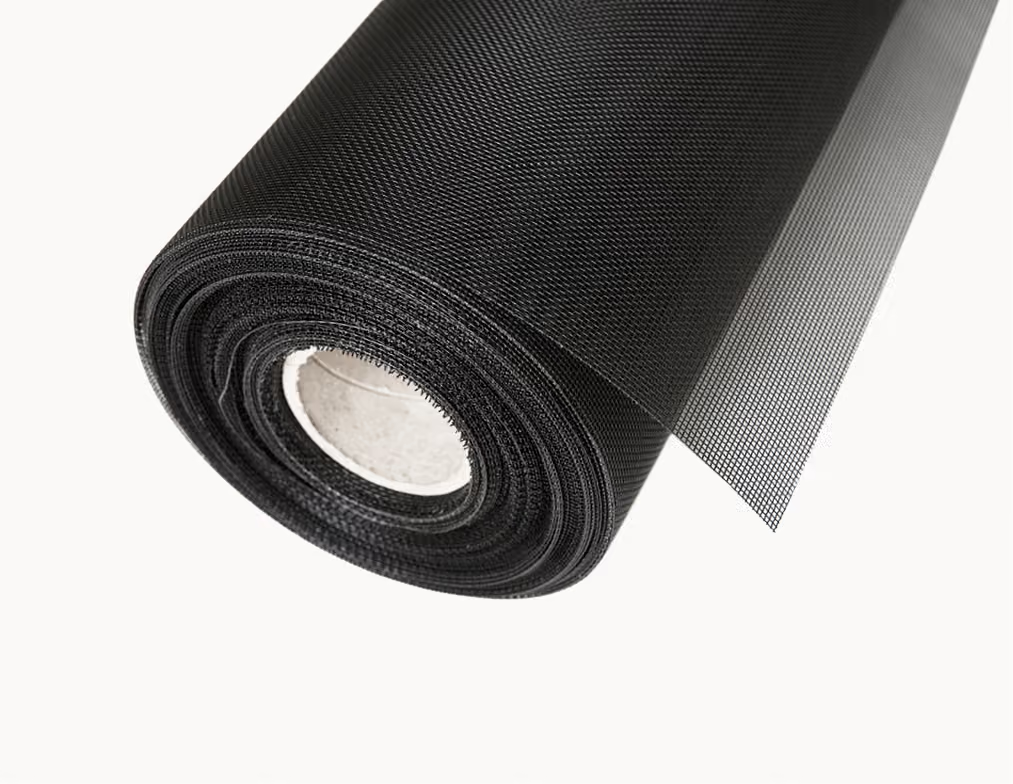
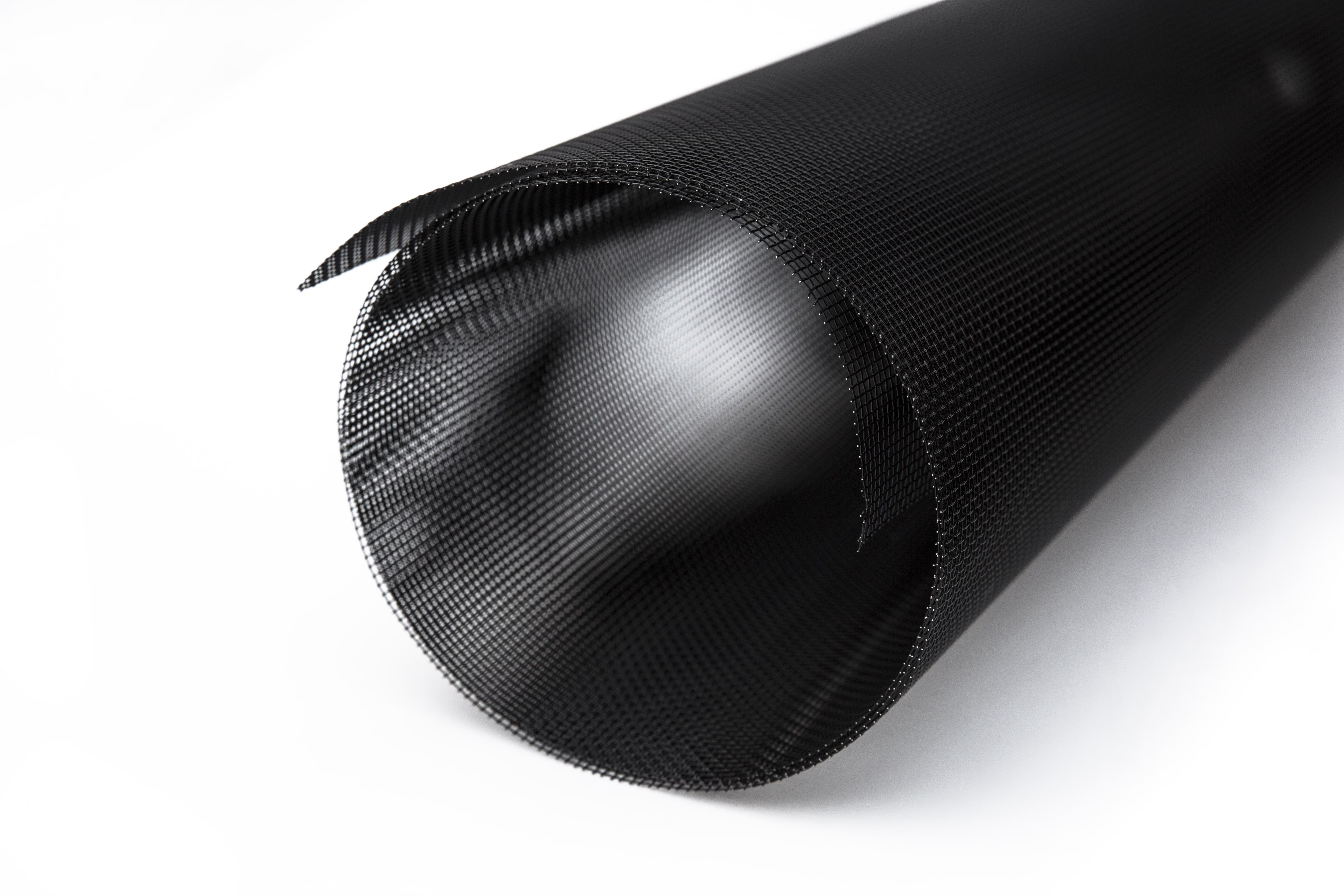
This research underscores the importance of specially-engineered ember-resistant mesh, which is designed to:
Vent protection is most effective when integrated into a broader home-hardening strategy.
NFPA and Firewise USA emphasize that wildfire resilience improves when multiple ignition pathways are addressed together, not individually.
Effective layering includes:
Government forestry agencies consistently highlight that conditions closest to the home play the largest role in determining ignition risk.
While vent protection reduces ember entry, interior maintenance reduces the consequences if embers get inside.
NFPA recommends:
These steps combined help limit ignition potential inside concealed spaces.
Wildfire science shows that homes are rarely lost because of a single dramatic failure. Instead, ignition often begins at overlooked vulnerabilities — like vents — where embers find access and fuel.
By addressing vent protection as part of a whole-home, inside-and-out strategy, homeowners can significantly reduce wildfire ignition risk using solutions supported by independent research.