
Wildfire risk is often treated as seasonal—something to address during peak summer months or when flames appear on the horizon. But the science tells a different story. For builders working in wildfire-prone regions, ember exposure is not a temporary condition. It’s a year-round design consideration that must be addressed at the construction stage.
Wind-driven embers are responsible for the majority of homes lost in wildfires, according to extensive testing by the Insurance Institute for Business & Home Safety (IBHS). These embers don’t require a fire front, extreme heat, or dramatic conditions to cause damage. They exploit small vulnerabilities in building design and maintenance—often long before flames arrive.
For builders, this reality has a clear implication: wildfire resilience can’t be seasonal, reactive, or surface-level. It must be built into homes from the start.
Embers are small, lightweight, and persistent. IBHS research shows they can travel more than a mile ahead of an active wildfire, propelled by wind and topography. Once airborne, embers don’t wait for peak fire season. They only need dry fuels, wind, and an ignition source—conditions that can occur in fall, winter, or early spring in many regions.
NFPA guidance reinforces this risk, emphasizing that embers ignite homes by finding weak points, not by overwhelming structures with heat. These weak points exist regardless of the season:
For builders, the takeaway is clear: designing for wildfire resilience isn’t about predicting when a fire will occur—it’s about assuming embers will eventually test the structure.
IBHS has conducted controlled wildfire experiments at its Research Center, subjecting full-scale homes to ember showers, radiant heat, and wind-driven fire conditions. These tests consistently reveal the same pattern: embers find the smallest opportunities to ignite structures.
Key IBHS findings relevant to builders include:
Importantly, IBHS testing shows that homes designed with layered defenses—addressing exterior fuels, boundary openings, and interior vulnerabilities—perform dramatically better under ember exposure.
Homeowners may approach wildfire prep seasonally. Builders can’t.
Construction decisions determine whether a home will resist ember exposure over decades, not just during a single fire season. Relying on homeowner maintenance alone—such as seasonal debris clearing—leaves too much to chance.
From a builder’s perspective, year-round ember defense:
IBHS and NFPA both stress that ignition-resistant construction is most effective when it minimizes reliance on perfect maintenance or ideal conditions.
The most resilient homes are built with the assumption that embers will arrive—possibly multiple times over the life of the structure.
Effective, builder-driven strategies include:
The building envelope is the final barrier between embers and ignition. Strengthening it means:
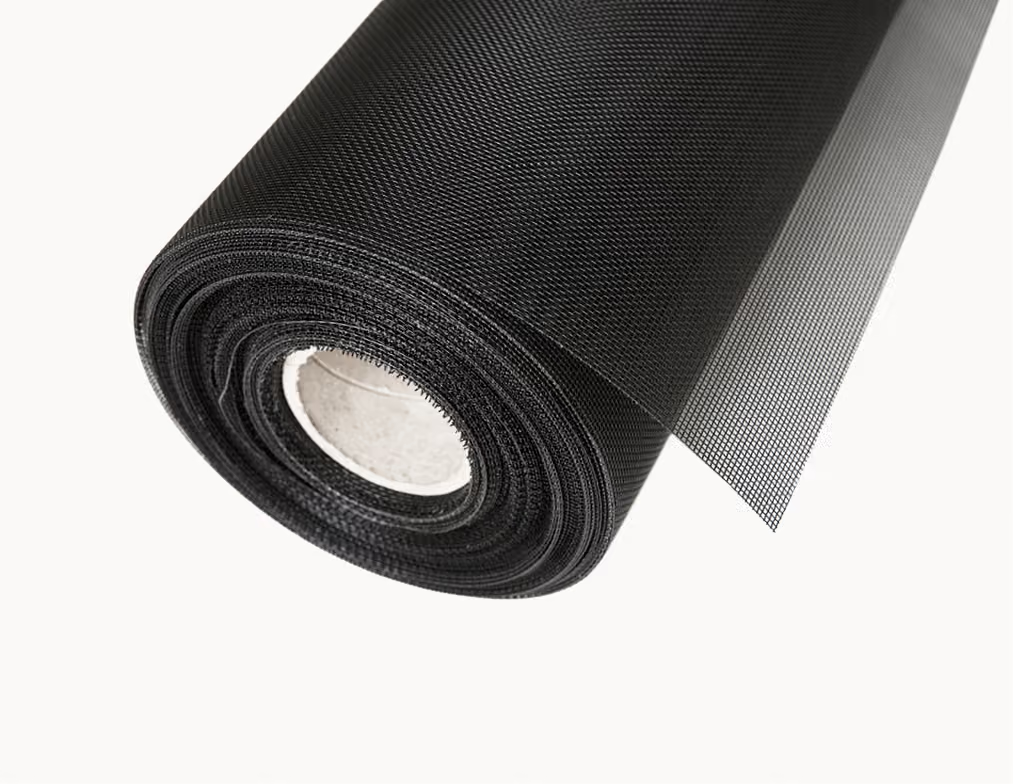
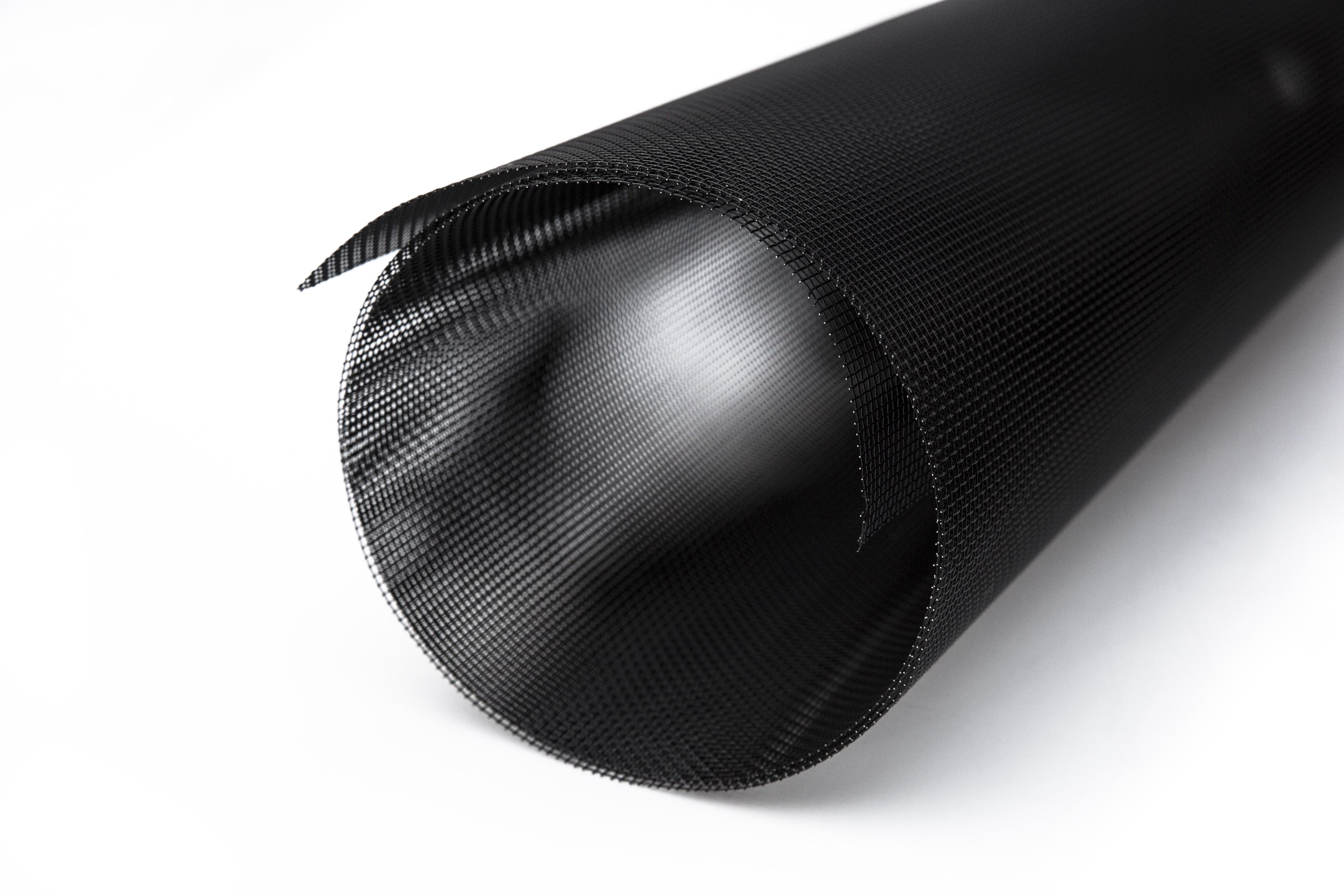
IBHS testing repeatedly identifies vents as one of the most common ember entry points. Builders can significantly reduce risk by specifying specially-engineered ember-resistant mesh over attic, crawl space, and foundation vents.
These meshes are designed to:
This approach addresses ember intrusion without compromising building performance.
Design should assume that debris will accumulate and conditions won’t always be ideal. Details like:
all reduce reliance on perfect homeowner behavior.
NFPA guidance emphasizes that wildfire protection is not just an exterior concern. IBHS lab tests confirm that interior ignition is a leading cause of total home loss, often beginning in concealed spaces.
Builders who take a holistic approach:
deliver homes that are better equipped to handle ember exposure long after construction is complete.
Wildfire behavior is changing. Fire seasons are longer, weather patterns are less predictable, and ember-driven losses continue to dominate post-fire damage assessments.
For builders, this means wildfire resilience must move from a seasonal talking point to a permanent design principle.
Homes built with ember resistance in mind:
Embers don’t take a break—and neither should the way we design and build homes. Contact us to get started.