
Wildfires are often imagined as walls of flame sweeping across landscapes. But when it comes to how homes are actually lost, wildfire science tells a more precise story: most structures ignite because of embers.
These wind-driven firebrands can travel far ahead of the main fire, exploiting vulnerabilities in and around a home. Understanding how ember storms work and how they interact with the Home Ignition Zone gives homeowners a practical framework for reducing wildfire risk.
An ember storm occurs when burning material is lifted and carried by wind ahead of a wildfire. These embers can travel over a mile, landing on roofs, decks, landscaping, and building openings — often long before flames are nearby.
According to the National Fire Protection Association (NFPA), ember exposure is the most common cause of home ignition during wildfires, particularly in wind-driven events.
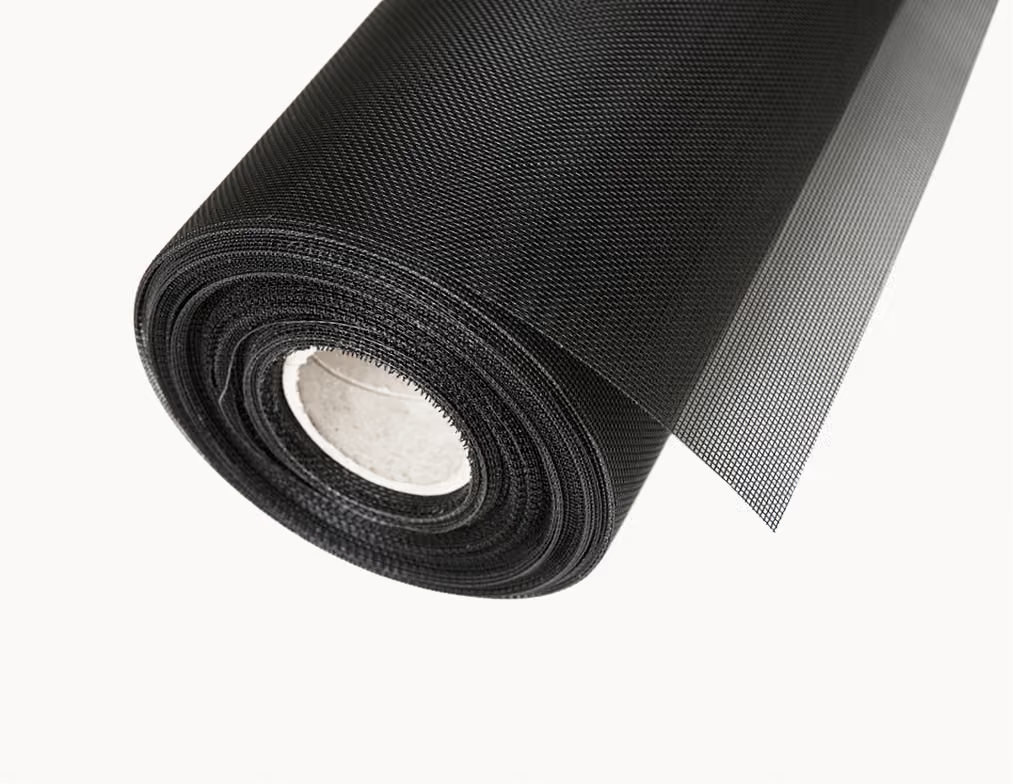
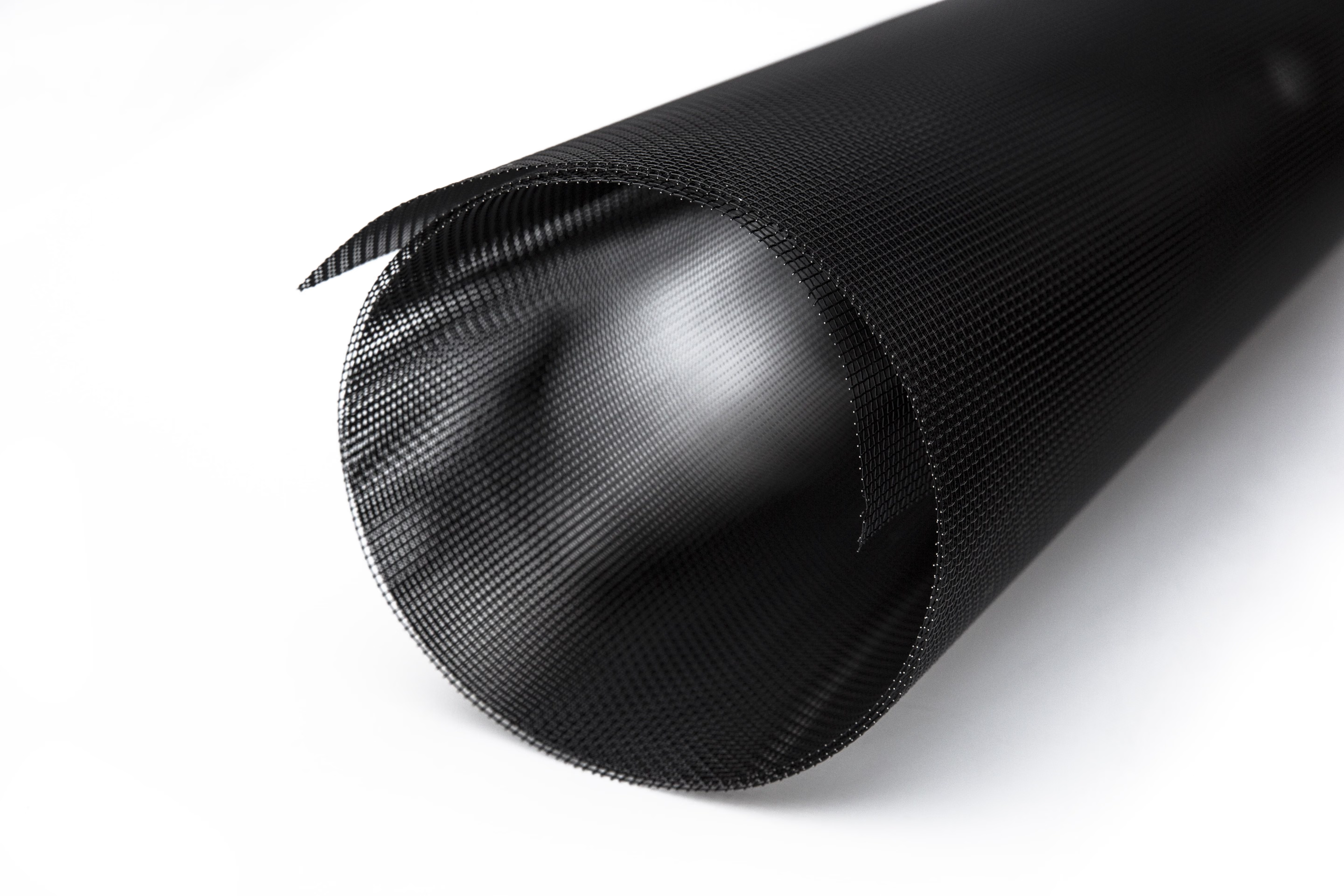
Research from the Insurance Institute for Business & Home Safety (IBHS) further shows that embers don’t need dramatic entry points. Small openings, especially vents, are enough to allow embers inside, where they can smolder unnoticed until a structure fire develops.
Embers behave differently than flames, which makes them harder to defend against without preparation. They can:
Post-fire investigations consistently identify ignition in locations such as:
Because these ignitions often begin in concealed spaces, homes may already be compromised before occupants realize there is a problem. This is why ember mitigation focuses on prevention, not reaction.
The Home Ignition Zone (HIZ) is a science-based concept developed through decades of wildfire research. NFPA defines it as the home and the area extending approximately 100 feet outward from the structure.
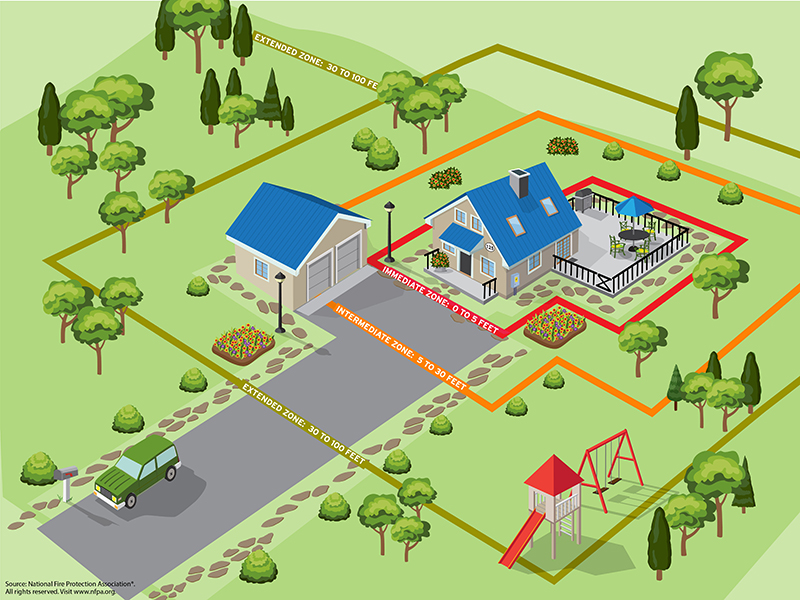
The HIZ is divided into three zones:
Immediate Zone (0–5 feet)
This area poses the greatest ignition risk. Embers landing here have the highest likelihood of igniting a structure.
Common concerns include:
Intermediate Zone (5–30 feet)
The focus here is reducing heat intensity and ember accumulation near the structure. Best practices include:
Extended Zone (30–100 feet)
This zone helps slow fire spread and reduce ember generation through fuel management and spacing.
State and federal forestry agencies consistently emphasize that conditions closest to the home play the largest role in determining whether it ignites.
Reducing Ember Risk: A Whole-Home Approach
Effective wildfire protection addresses both exterior exposure and interior pathways.
NFPA and state forestry guidance support this layered approach because it reduces the chance that embers will both enter the home and find fuel once inside.
Wildfire research has made one thing clear: homes ignite because of vulnerabilities, not because wildfires are unstoppable. Ember storms take advantage of small gaps, accumulated debris, and overlooked maintenance issues — many of which homeowners can address well before fire conditions escalate.
By understanding ember behavior and focusing on the Home Ignition Zone, homeowners can take targeted, science-backed steps to reduce risk and improve resilience.
Wildfire protection starts at the structure and it starts long before a fire is nearby.
–
Explore WDM’s wildfire education resources to learn how specially-engineered ember-resistant mesh and holistic home-hardening strategies help address the most common ember entry points — as part of a layered, research-backed approach to protecting your home from the inside and out.