Case Study: From Grassroots Action to Scalable Wildfire Resilience
How Seminole Springs, a 215-home community hit hard by the 2018 Woolsey Fire, registered 104 homes for a community-led vent retrofit program.
Background
Nestled in the Santa Monica Mountains, Seminole Springs Mobile Home Park is a community of 215 homes, 110 of which were destroyed in the 2018 Woolsey Fire. While much of the community has since been rebuilt, older homes remain vulnerable. Close proximity between homes, unmanaged vegetation, limited Zone Zero defensible space, and outdated 1/4-inch mesh screening on vents and skirting contribute to ongoing very high wildfire risk.
“Seminole Springs lost more than a hundred homes in the Woolsey Fire, so wildfire isn't an abstract risk for us. What this project gave our community was something every household could actually do about it.” — Tommy Sobel, Seminole Springs Board Member
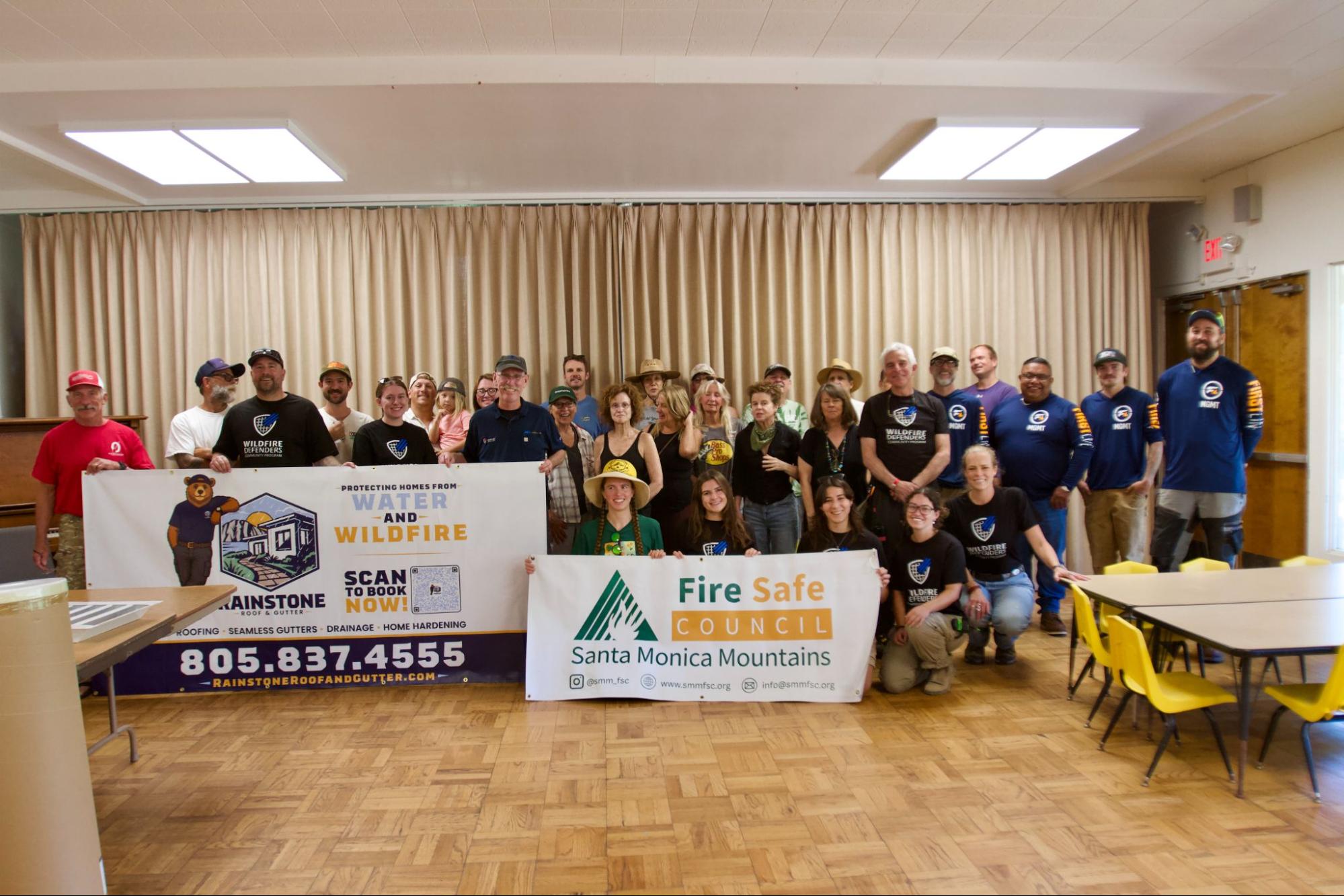
Pre-event volunteer briefing at the Seminole Springs community workday
The Project
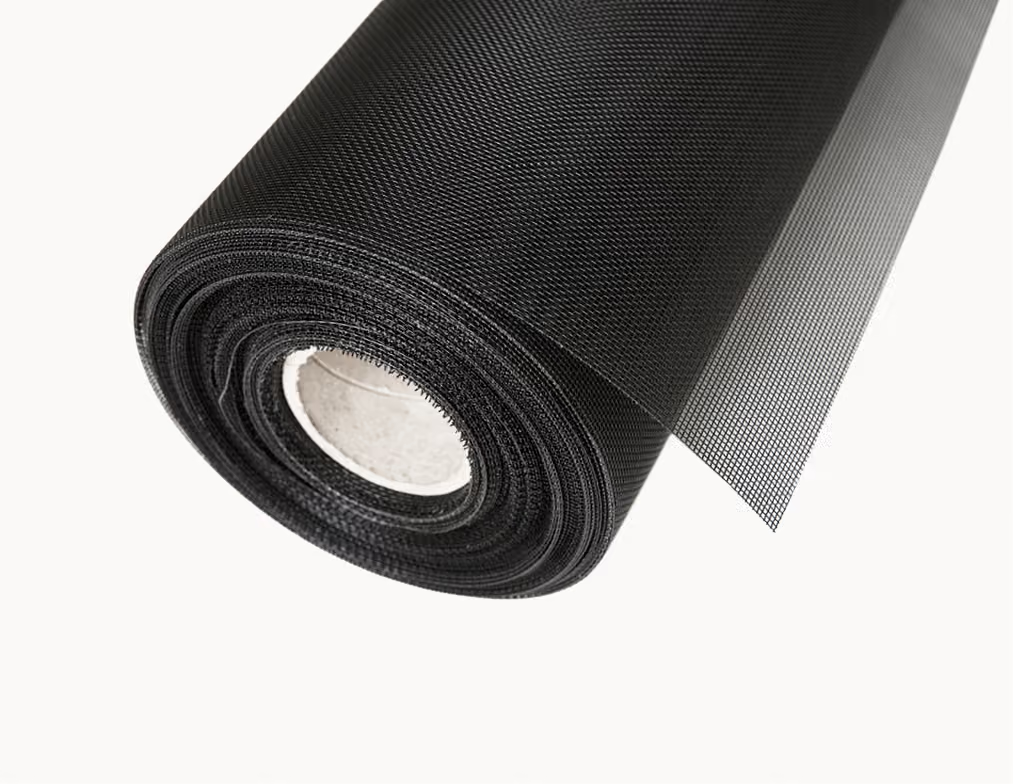
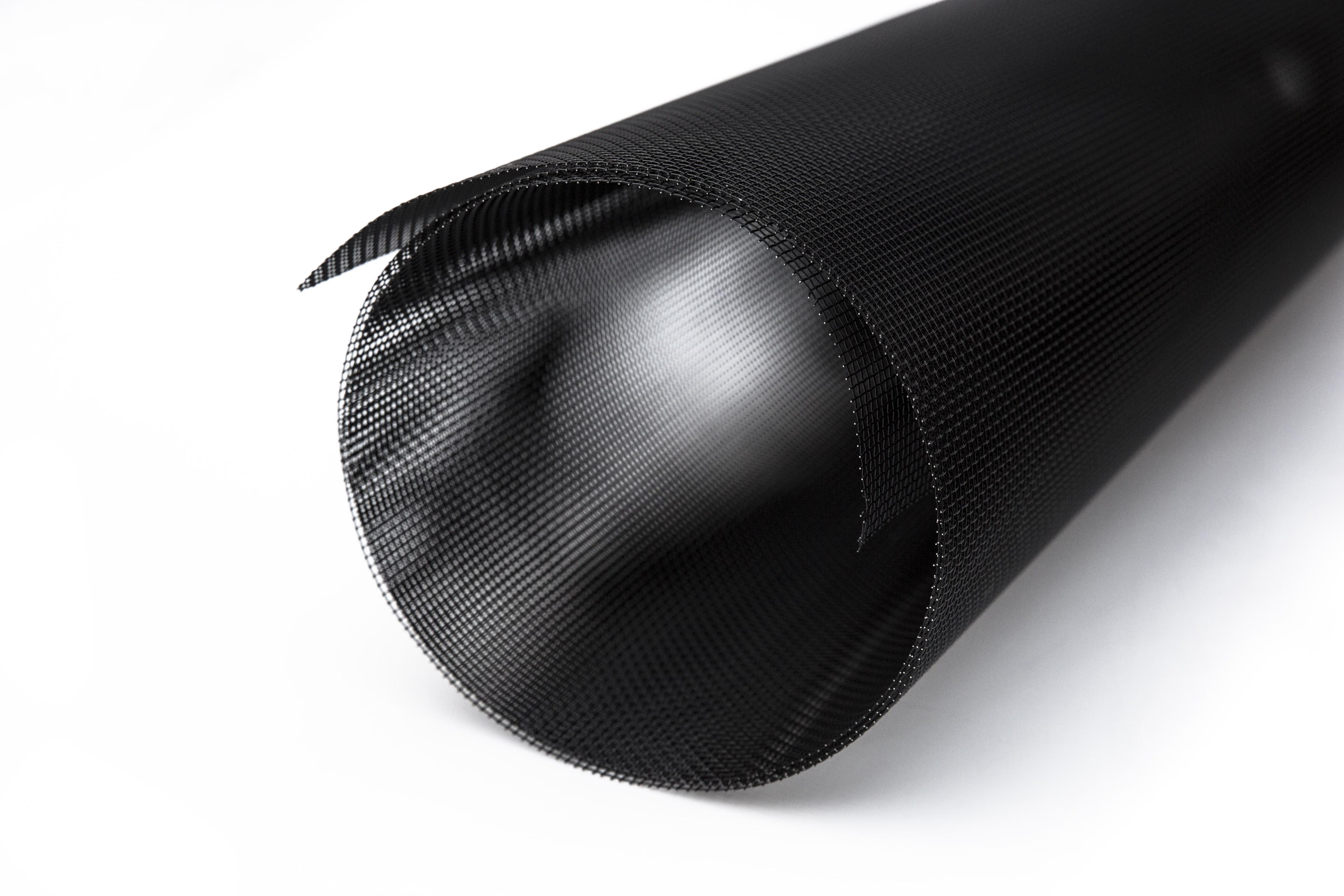
Wildfire Defenders partnered with Wildfire Defense Mesh and the Santa Monica Mountains Fire Safe Council (SMMFSC) to launch a community-led vent retrofit program. Wildfire Defense Mesh donated enough WDM 98 (1/16-inch) ember-resistant mesh to retrofit 100 homes, creating an opportunity for residents to take practical, affordable steps toward home hardening.
Beyond individual home retrofits, our goal was to understand how communities use the platform, identify barriers to completing mitigation work, and explore what it takes to scale home hardening efforts across entire neighborhoods. The project also aimed to demonstrate how coordinated, community-wide mitigation can strengthen wildfire resilience and improve overall community safety and survivability.
Decisions Made Along the Way
Decisions made along the way
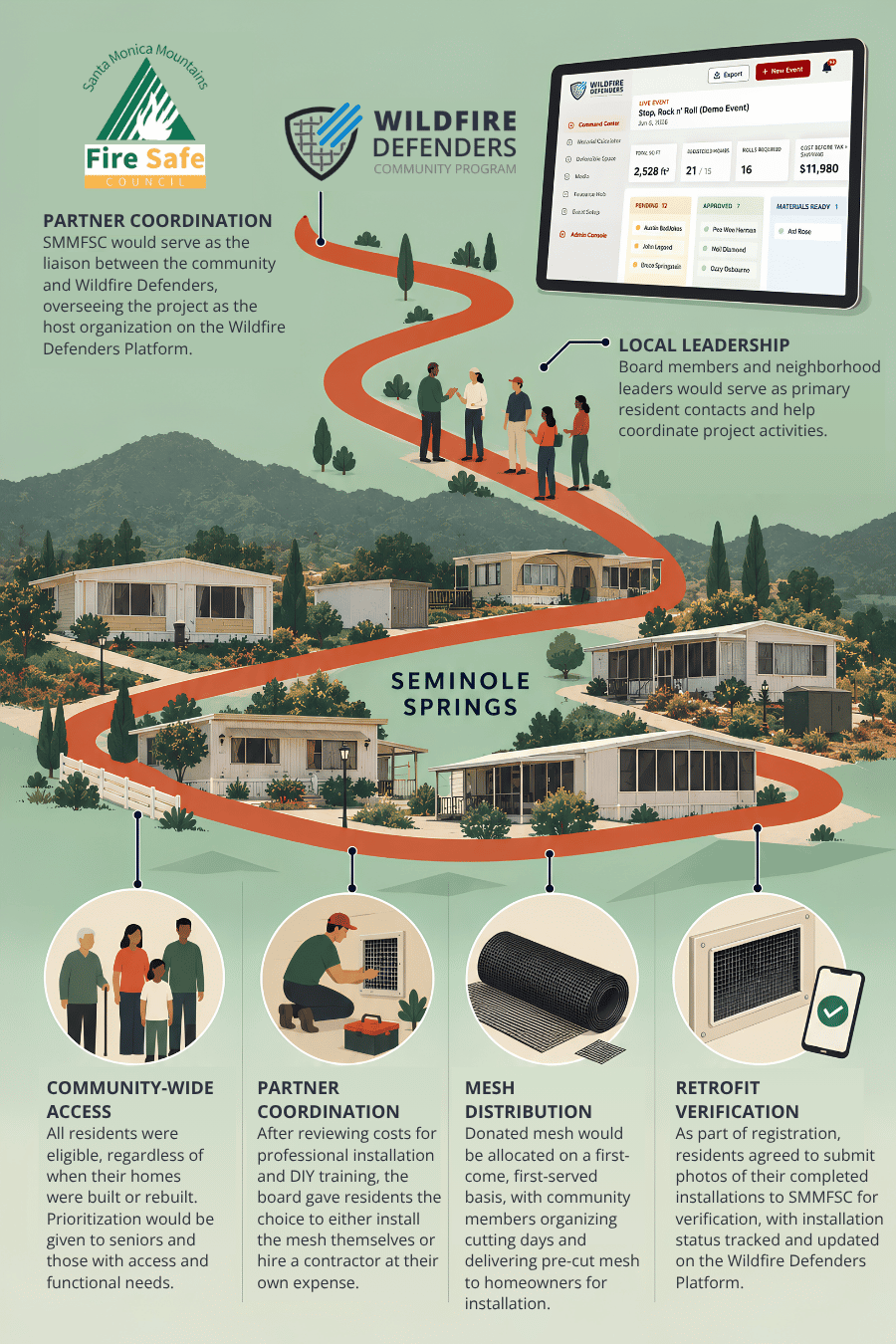
Partner Coordination: SMMFSC would serve as the liaison between the community and Wildfire Defenders, overseeing the project as the host organization on the Wildfire Defenders Platform.
Local Leadership: Board members and neighborhood leaders would serve as primary resident contacts and help coordinate project activities.
Community-Wide Access: All residents were eligible, regardless of when their homes were built or rebuilt. Prioritization would be given to seniors and those with access and functional needs.
Installation Choice: After reviewing costs for professional installation and DIY training, the board gave residents the choice to either install the mesh themselves or hire a contractor at their own expense.
Mesh Distribution: Donated mesh would be allocated on a first-come, first-served basis, with community members organizing cutting days and delivering pre-cut mesh to homeowners for installation.
Retrofit Verification: As part of registration, residents agreed to submit photos of their completed installations to SMMFSC for verification, with installation status tracked and updated on the Wildfire Defenders Platform.
Project Milestones
Board Engagement: Wildfire Defenders and SMMFSC presented the program to the community board to secure support and participation.
Community Outreach: Residents were introduced to the program, eligibility, and registration process via in-person presentations, flyers, eblasts, and WhatsApp.
DIY Training: Residents received hands-on instruction in home hardening, ember intrusion risks, and proper mesh installation.
Community Workday: Vent measurements were completed for 30 homes plus the clubhouse, and mesh was measured and cut for 20 homes. Through partnerships with Topanga Coalition for Emergency Preparedness (TCEP), RainStone Roof & Gutter, and First Line Defense, installers assisted residents who needed additional support.
Outcomes
104 homes registered
27 completed vent retrofits on homes
2 community structures retrofitted
50 homes with mesh retrofits started
Seminole Springs community day
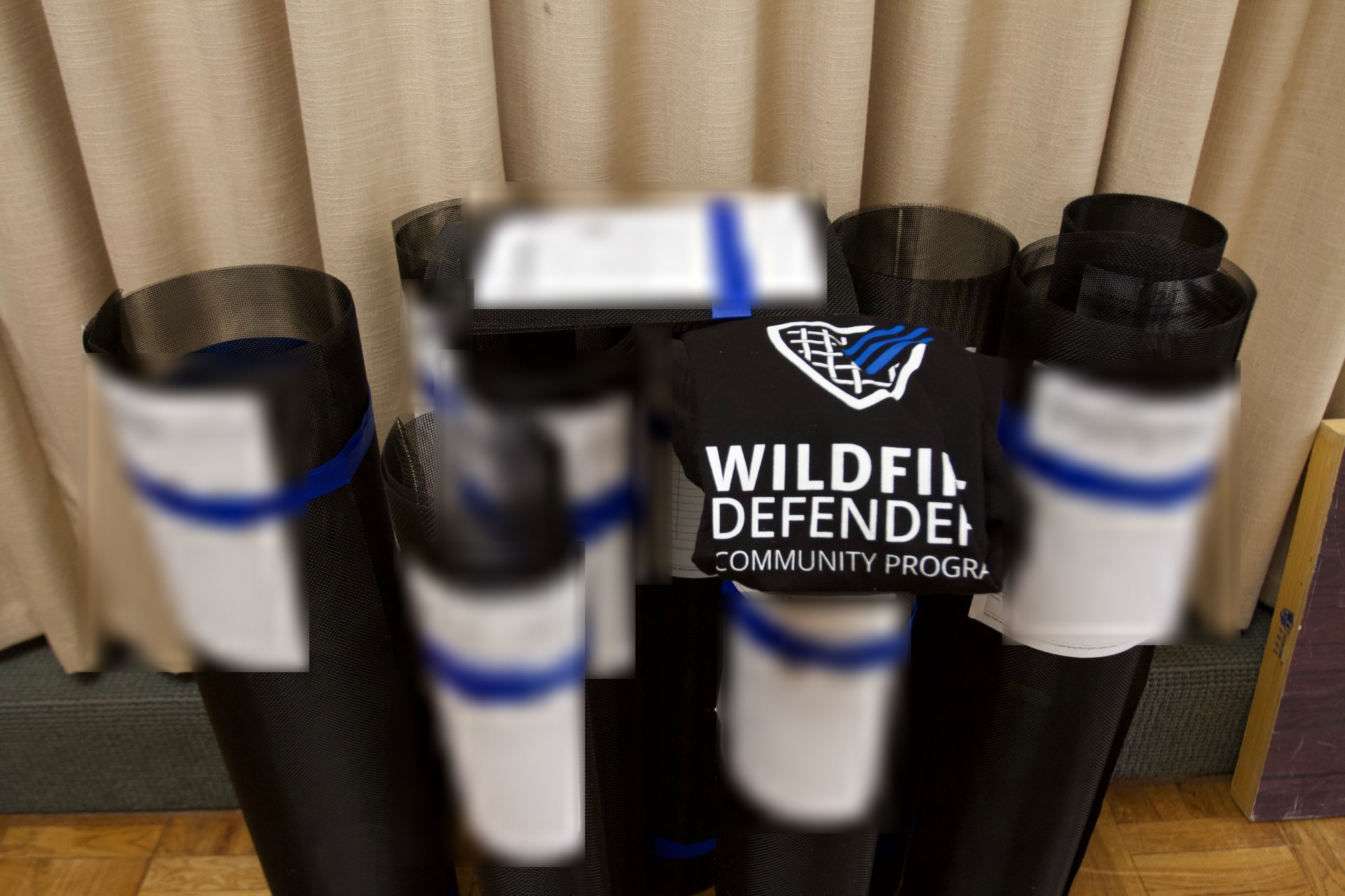
Cut pieces of Wildfire Defense Mesh, ready for installation
Key Lessons for Other Communities
“If one or two people on every street would be willing to help gather phone numbers and encourage people to be signed up for the program, that's the way we did it.” — Seminole Springs resident, Laguna Homies
Start with Education: Build awareness of home hardening and ember intrusion risks before opening registration.
Assess Before Distributing: Conduct Home Ignition Zone (HIZ) assessments to identify vent locations, measurements, and material needs before allocating donated mesh.
Identify Neighborhood Champions Early: Recruit local leaders to encourage participation, coordinate residents, and support community workdays.
Expand Outreach: Identify key community communication channels early and share consistent messaging across all channels, including flyers delivered directly to residents' mailboxes to reach those beyond digital communications.
Offer Flexible Training: Schedule multiple sessions, including virtual options and informal office hours, to accommodate residents' schedules and provide opportunities to ask questions.
Plan Multiple Workdays: Schedule additional workdays to give residents more opportunities to complete installations and receive hands-on assistance.
About Wildfire Defenders
Wildfire Defenders is a free platform helping local leaders educate communities and turn mitigation plans into action. Its Community Command Center streamlines outreach, events, and project coordination, while integrating with Home Ignition Zone (HIZ) software to prioritize needs and track completed work.