
Insurance availability in wildfire-prone areas has changed dramatically over the past five years. Major carriers have pulled out of high-risk markets entirely. Others have tightened underwriting standards, raised premiums, or begun non-renewing homes that don't meet specific mitigation criteria.
Understanding what insurers are actually looking for — and why — helps homeowners stay insurable, negotiate better rates, and avoid the non-renewal notices that have become routine in California and other Western states.
Historically, insurance underwriters made decisions primarily based on location: if your home was in a designated high-risk zone, your premium reflected that zone-level risk. Mitigation measures were nice-to-haves, not requirements.
That model is breaking down. Carriers now use property-level risk assessment tools that evaluate individual homes based on building materials (roof, siding, windows, vents), defensible space within specific distance bands, proximity to wildland fuels, access for fire equipment, and fire district response time. Two homes on the same street can have drastically different premiums — or one can be insurable while the other isn't — based entirely on these property-specific factors.
1. Roof Material and Condition. Class A roofing (asphalt shingles, metal, tile, slate) is now effectively mandatory for insurability in most WUI areas. Wood shake roofs are uninsurable in many markets. Condition matters as much as material: carriers look for no missing or damaged shingles, clean gutters, and no overhanging branches within 10 feet. Many carriers now require roof inspections every five years in high-risk zones.
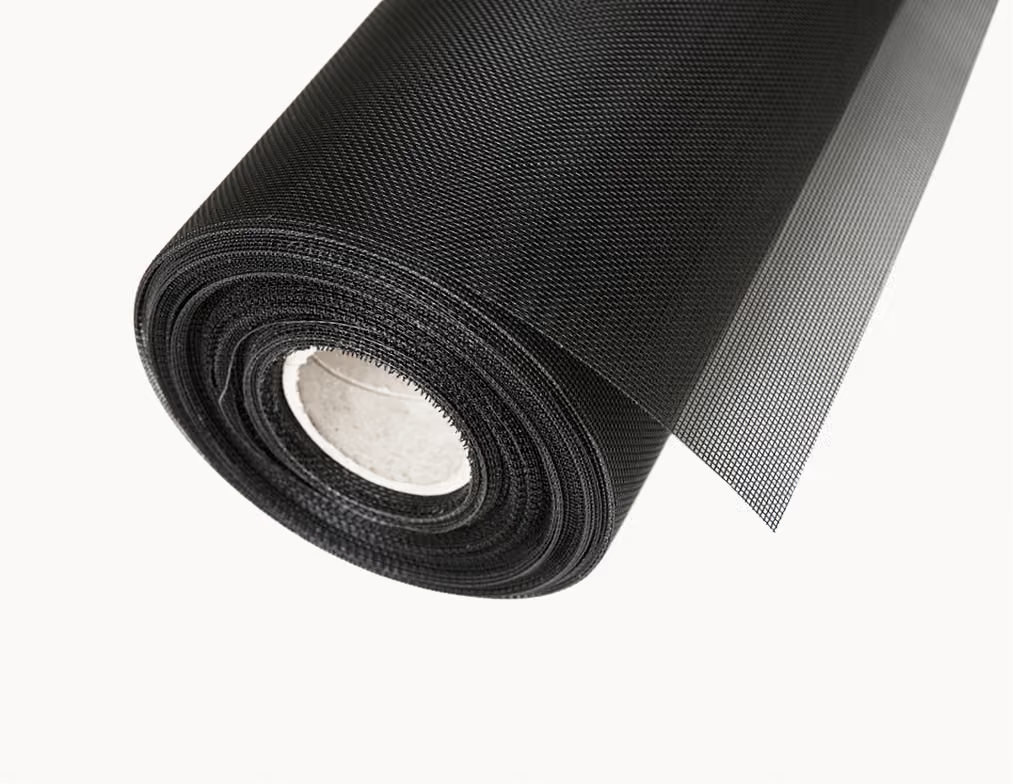
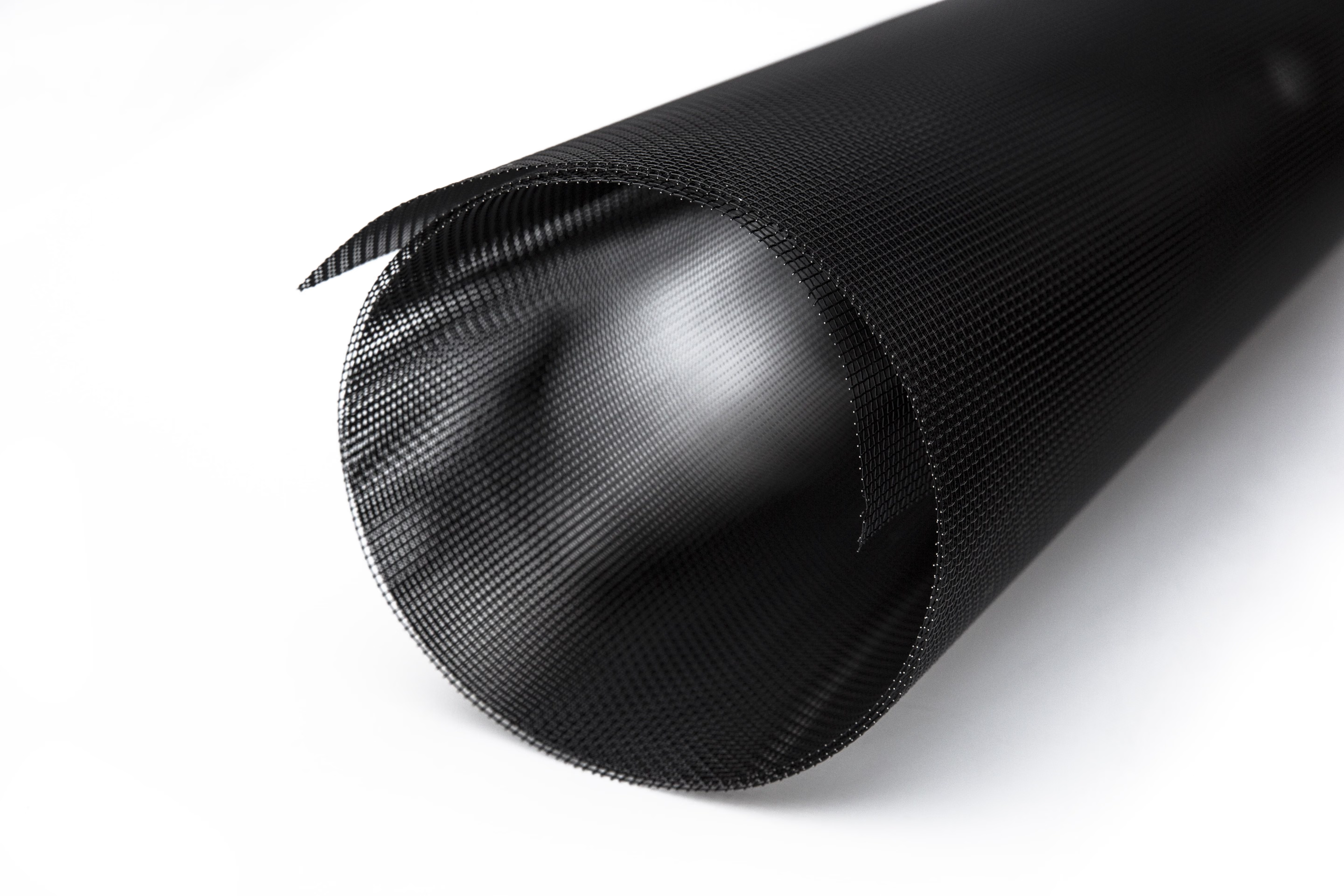
2. Ember-Resistant Vents. This is the single most impactful upgrade for insurability, and the one most homeowners overlook. Standard metal or plastic vents with 1/4" or larger mesh do not meet current underwriting standards. Carriers want at least 1/8" corrosion-resistant mesh covering all ventilation openings, tested to ASTM E2886, with proper installation and no gaps. WDM 98— Wildfire Defense Mesh's 1/16" stainless steel mesh — is engineered specifically for this application and satisfies the ASTM E2886 standard that underwriters require. Embers entering through vents are the #1 cause of home ignition — underwriters know this, and homes without ember-resistant vents are classified as higher risk.
3. Defensible Space — Zone 0 and Zone 1. Zone 0 (0–5 feet from the structure) must have no combustible vegetation or materials — no mulch, pine needles, or wood chips against the foundation, no firewood, propane tanks, or trash bins. Zone 1 (5–30 feet) requires vegetation thinned and maintained with no ladder fuels and tree canopies separated by at least 10 feet. Many carriers now require photo documentation of defensible space at underwriting and renewal.
4. Siding and Window Materials. Noncombustible or ignition-resistant siding (fiber cement, stucco, brick, metal) is increasingly required for new policies in very high-risk zones. For windows, carriers prefer dual-pane or tempered glass that resists radiant heat penetration. Vinyl siding is acceptable in moderate-risk zones but may trigger higher premiums in severe fire-risk areas.
5. Deck and Patio Materials. Combustible wood decks attached to the home are a major underwriting concern. Carriers prefer composite or metal decking, enclosed underdeck areas with no exposed combustible framing, and no combustible patio furniture or propane grills within 10 feet of the structure.
Home hardening doesn't just prevent non-renewal — it can directly reduce premiums. Documented premium impacts from the industry include: Class A roof upgrade (10–20% reduction), ember-resistant vents (5–15% reduction), defensible space certification (5–10% reduction), and IBHS Wildfire Prepared Home designation (up to 20% with participating carriers). These reductions stack — a home with all four improvements can see 30–40% lower premiums compared to an unmitigated property in the same zone.
This is the gold standard for insurability. The IBHS designation certifies that a home meets science-based wildfire resilience standards and is recognized by insurers as a positive underwriting factor. California Senate Bill 11 requires insurance companies licensed in California to offer premium discounts to homeowners who achieve the designation. Even carriers that don't offer explicit discounts use the designation when making renewal decisions.
Documentation is as important as the mitigation itself. If an insurer doesn't know you've made improvements, the improvements don't affect your premium or renewal decision. Follow these practices: photograph every entry point before and after installation with date stamps; keep all receipts; ask WDM for a product specification sheet confirming ASTM E2886 compliance; complete the IBHS self-assessment and apply for designation; and notify your agent in writing after earning designation — discounts are not automatic.
Non-renewal notices are the new normal in high-risk zones. Once a non-renewal is issued, options narrow quickly: other carriers decline or quote at 2–3x the previous premium, and homeowners end up in the California FAIR Plan or equivalent state last-resort market. FAIR Plans are expensive, offer minimal coverage, and were never designed to be permanent solutions. Getting back into the standard market after moving to FAIR is difficult.
The insurance market in wildfire zones isn't getting easier. But homes that meet modern resilience standards remain insurable — and often at better rates than homes that don't.